
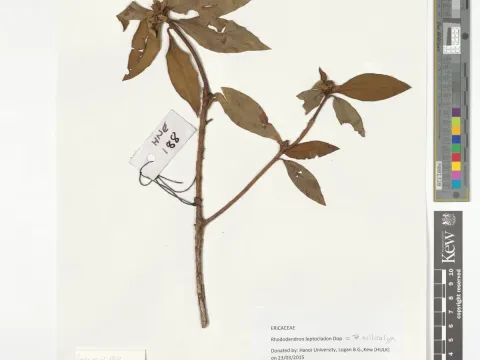
Rhododendron ciliicalyx
Rhododendron ciliicalyx
Rhododendron ciliicalyx is a distinguished member of the Ericaceae family. This shrub is native to the mountainous regions of Yunnan and Guizhou in China, thriving in temperate, moist environments typical of high-altitude forests.
What the section contains
Rhododendron ciliicalyx
Cultivation success relies heavily on soil conditions. The plant requires well-drained, acidic soil with a pH between 4.5 and 5.5. Heavy or alkaline soils should be avoided or heavily amended with peat moss and pine bark to ensure adequate aeration for the sensitive root system.
Regarding light, this rhododendron prefers partial shade or dappled sunlight. Providing protection from the harsh afternoon sun is essential to prevent leaf scorching and to maintain the deep green color of its evergreen foliage throughout the year.
The botanical name refers to the distinctive ciliate (fringed) hairs found on the calyx of the flowers. The blossoms are often large, fragrant, and range in color from white to soft pink, making this species a highly desirable subject for specialized plant collections.
In terms of usage, it is primarily an ornamental shrub. Due to its specific climate needs, it is often kept in greenhouses or conservatories in regions with freezing winters, while in milder maritime climates, it can be grown outdoors in protected garden spots.
Phytophthora root rot is the most serious threat to Rhododendron ciliicalyx. This pathogen thrives in waterlogged soils, making proper drainage and careful watering management the most critical preventative measures for any grower.
Insect pests such as spider mites and rhododendron lace bugs are common. These pests attack the foliage, causing stippling, yellowing, and general decline. Frequent monitoring and the application of horticultural oils or systemic insecticides are recommended.
Iron chlorosis often manifests as yellowing between leaf veins. This is usually a sign of an inappropriate pH level, which prevents the plant from absorbing necessary micronutrients. Regular soil testing and acidifying fertilizers help maintain plant health.
Powdery mildew may occur during periods of high humidity and poor air circulation. To manage this, gardeners should space plants appropriately to allow for airflow and apply fungicides if early signs of white fungal growth appear on the leaves.
Winter damage is a significant risk in colder zones. Desiccation of the leaves caused by cold winds while the roots are frozen can lead to branch dieback. Providing windbreaks and protective coverings is standard practice for winter protection.