
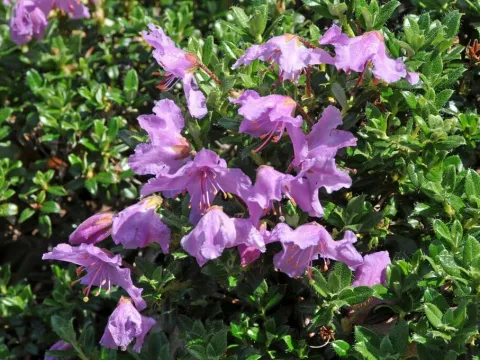
Rhododendron calostrotum
Rhododendron calostrotum
Rhododendron calostrotum is a dwarf evergreen shrub belonging to the Ericaceae family. Originating from the high-altitude regions of Tibet, Myanmar, and China, this species is well-adapted to rocky, alpine environments and displays remarkable resilience in temperate climates.
What the section contains
Rhododendron calostrotum
The primary requirement for successful growth is a highly acidic, well-draining soil with a pH level between 4.5 and 5.5. Because the roots are delicate and prone to suffocation, ensuring excellent drainage is critical; heavy clay soils must be amended with grit or sand to prevent water stagnation.
This shrub thrives in partial shade. While it requires light for optimal growth and flowering, direct midday sunlight can scorch the foliage. Protecting the plants from drying winds is also essential, particularly in the winter and early spring, to prevent the evergreen leaves from losing too much moisture.
Consistent soil moisture is necessary for the health of the plant. A thick layer of organic mulch, such as pine needles or pine bark, is highly recommended. This practice not only retains soil moisture but also mimics the natural forest floor conditions and helps maintain the required soil acidity over time.
The horticultural use of Rhododendron calostrotum is primarily decorative. Due to its slow-growing and compact habit, it is perfectly suited for rock gardens, heather beds, and alpine troughs. It adds significant structural interest and aesthetic value to garden landscapes, especially when planted in small groups.
The most significant threats to Rhododendron calostrotum are fungal diseases, such as Phytophthora root rot, usually triggered by poor drainage or overwatering. Botrytis blight can also occur in stagnant, humid environments, necessitating improved air circulation to protect the plant.
Pest issues often include the rhododendron bug, which feeds on the undersides of leaves, causing them to develop a silvery or mottled appearance. Additionally, spider mites can become problematic during hot, dry spells, leading to weakened growth and leaf drop if left unchecked.
Managing disease involves both cultural and chemical interventions. Regular sanitation, which includes removing dead or diseased wood and clearing debris from the base, is vital. Fungicides should be applied preventatively if local conditions favor disease outbreaks or after periods of prolonged rainfall.
To control insect pests, gardeners should use appropriate systemic insecticides or horticultural oils. Monitoring the foliage closely during the growing season allows for early intervention, which is much more effective than trying to manage a large infestation later in the season.
While the species is hardy, young plants benefit from light protection during extreme weather events. By maintaining the correct soil pH, ensuring adequate drainage, and performing timely maintenance, gardeners can ensure their Rhododendron calostrotum remains healthy and vibrant for many years.