
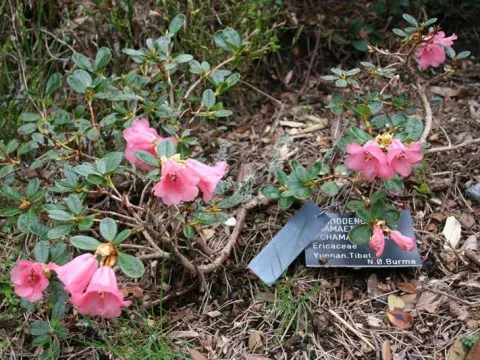
Rhododendron chamaethomsonii
Rhododendron chamaethomsonii
Rhododendron chamaethomsonii is a species of flowering shrub belonging to the Ericaceae family. Known for its prostrate and compact habit, this alpine plant is a highly sought-after specimen for rock gardens and specialized shrub collections.
What the section contains
Rhododendron chamaethomsonii
The species is native to the high-altitude regions of southeastern Tibet and adjacent areas of China and Myanmar. It is naturally adapted to mountain environments, which dictates its specific physiological requirements in a garden setting.
Successful cultivation depends on providing an acidic, well-drained, and organic-rich soil. The root system is extremely sensitive to waterlogging, necessitating the installation of a proper drainage layer when planting in heavy or clay soils.
This rhododendron thrives in cool, humid climates. It should be sited in partial shade, protected from intense afternoon sun and harsh drying winds which can cause scorched leaves and dehydration during the growing season.
Proper agricultural practices include applying a mulch of pine needles or peat to maintain consistent soil moisture and acidity. Supplemental watering is crucial during dry spells, especially while the flower buds are developing.
The most common health issues for this species are related to root pathogens, particularly Phytophthora, which thrive in poorly drained soils. Preventing soil compaction is essential to minimize the risk of root rot.
Spider mites are common pests that tend to infest the foliage during hot and dry weather conditions. Regular monitoring is advised, as these pests can cause significant leaf discoloration and reduce the plant's overall vigor.
Vine weevils are another potential threat. Adult beetles feed on the edges of leaves, while larvae can cause severe damage by consuming the plant's roots, potentially leading to the sudden collapse of the shrub.
Powdery mildew may occur if air circulation around the foliage is restricted. Ensuring enough space between plants and practicing selective pruning helps to mitigate this risk and improves the general appearance of the shrub.
For optimal plant health, keep the garden site free of weeds that compete for nutrients and ensure the pH level remains strictly within the acidic range. Periodic soil testing is a recommended practice for long-term maintenance.