
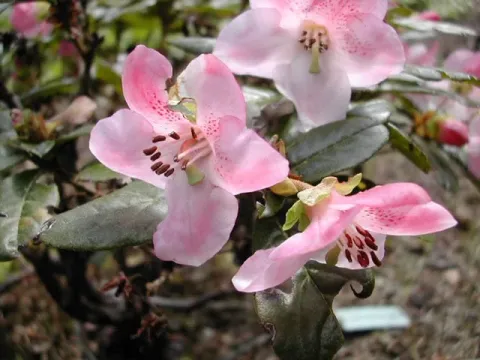
Rhododendron charitopes
Rhododendron charitopes
Rhododendron charitopes is a slow-growing evergreen shrub belonging to the Ericaceae family. Originating from the high-altitude regions of Myanmar and Tibet, it is prized in horticulture for its compact habit and vibrant, bell-shaped flowers.
What the section contains
Rhododendron charitopes
The plant strictly requires acidic growing conditions, typically demanding a soil pH between 4.5 and 5.5. A mix of peat moss, pine bark, and perlite provides the necessary drainage and acidity levels that these plants require to thrive.
Climatic requirements involve stable cool temperatures and high atmospheric humidity. They are best suited for woodland gardens where they can be protected from scorching midday sun, which can easily desiccate the foliage.
The root system is fibrous and shallow, making it susceptible to moisture stress. Regular irrigation with soft or rainwater is essential, as the accumulation of minerals from hard water can damage the roots over time.
Mulching is a critical horticultural practice for this species. Applying a layer of pine needles or wood chips helps maintain consistent root temperatures and suppresses weed growth while preventing the soil from compacting.
Root rot is the most devastating condition for Rhododendron charitopes, often caused by Phytophthora species in waterlogged soils. Ensuring excellent drainage is the primary defense strategy against this pathogen.
Leaf spots, often caused by fungal infections like Cercospora, can disfigure the plant. This is usually mitigated by pruning to ensure good airflow and keeping the foliage dry during humid periods.
Insect pests such as rhododendron bugs (Stephanitis rhododendri) cause chlorotic stippling on the upper leaf surfaces. Regular inspection is required during the growing season to detect early signs of infestation.
Vine weevils represent a significant threat to root systems, as their larvae feed on the roots of container-grown and garden-planted rhododendrons, leading to sudden wilting and eventual death of the specimen.
Integrated pest management, including the use of entomopathogenic nematodes or targeted horticultural oils, is recommended for sustainable control without harming the beneficial pollinators that visit the shrubs.