
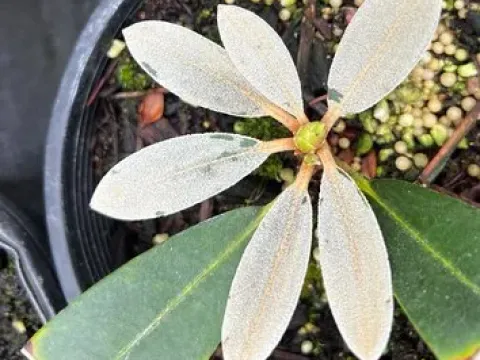
Rhododendron beesianum
Rhododendron beesianum
Rhododendron beesianum is a distinct perennial shrub belonging to the Ericaceae family. Known for its robust foliage and elegant flowering habit, this species is highly regarded by collectors of alpine and temperate ornamental plants.
What the section contains
Rhododendron beesianum
Native to the high-altitude regions of Tibet and Southwest China, the plant is naturally adapted to cool mountain climates. It thrives in environments characterized by high atmospheric humidity and moderate ambient temperatures throughout the growing season.
To cultivate this species successfully, gardeners must provide well-drained, acidic soil. A planting medium consisting of peat moss, pine needles, and grit provides the necessary pH levels and ensures excellent aeration for the root system.
Water management is critical for the health of this shrub. While it requires consistent moisture to thrive, the soil must never become waterlogged, as poor drainage is the primary cause of root rot in this particular species.
Positioning the plant in partial shade is essential to protect it from harsh midday sun. Mulching the base of the plant with pine bark helps retain soil moisture, suppresses weeds, and maintains the required acidity levels in the root zone over time.
Common health issues include fungal pathogens such as Phytophthora, which typically attack the plant when the growing medium remains overly saturated or lacks proper drainage channels.
Iron chlorosis frequently occurs if the soil pH rises above the optimal range for Ericaceous plants. This prevents the shrub from absorbing necessary minerals, resulting in yellowing foliage with green veins.
Insect pests such as rhododendron bugs and spider mites are major concerns. These pests can rapidly damage the leaves by feeding on cell sap, leading to stunted growth and loss of aesthetic appeal.
Effective control involves monitoring the undersides of leaves and applying systemic insecticides or horticultural oils during the early stages of infestation to prevent population spikes.
Good cultural practices, including sanitation and removing fallen leaves around the base, are the most effective ways to minimize the impact of pests and diseases in a garden setting.