
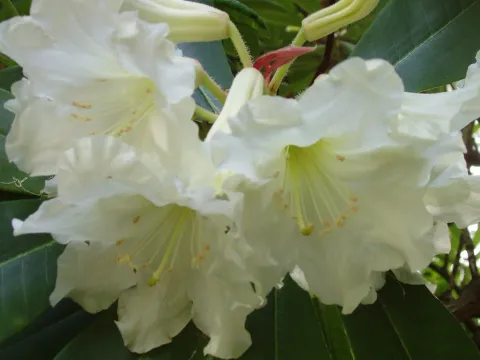
Rhododendron auriculatum
Rhododendron auriculatum
Rhododendron auriculatum is a large, evergreen shrub or small tree belonging to the Ericaceae family. Known for its distinct auriculate (ear-shaped) leaf bases, it stands out in the landscape as one of the latest-flowering species, blooming in mid to late summer with large, fragrant, white to pink flowers.
What the section contains
Rhododendron auriculatum
Originating from the mountainous regions of central and eastern China, this species thrives in humid, cool, and protected environments. It requires a location with partial shade to filtered sunlight, as intense heat and direct sun can lead to leaf scorch and dehydration.
To cultivate this species, growers must provide acidic soil with a pH range between 4.5 and 5.5. The soil should be rich in organic matter, such as leaf mold or peat, and possess excellent drainage properties to prevent root suffocation, which is a common issue in clay-heavy substrates.
The plant requires consistent moisture throughout the growing season. Mulching the root zone with organic material, such as pine bark or needles, is essential to retain soil moisture, maintain acidity, and protect shallow roots from extreme temperature fluctuations.
In ornamental horticulture, Rhododendron auriculatum is prized as a structural specimen in woodland gardens. Its large, leathery foliage and imposing habit make it a magnificent addition for collectors and landscape architects looking to extend the flowering season into the summer months.
The most common disease affecting this species is Phytophthora root rot, usually caused by waterlogged soil and poor drainage. This condition is difficult to treat once established, making proper site selection and soil preparation the primary defense mechanisms for the gardener.
Powdery mildew is a common fungal threat, particularly in poorly ventilated areas or during periods of high humidity. It manifests as a white, dusty coating on the leaves, which can be managed by improving air circulation around the shrub and using appropriate fungicides when necessary.
Insect pests, including the rhododendron bug and spider mites, can cause significant damage by feeding on the sap of the foliage. This often results in chlorosis, bronzing, or stunted growth, which severely detracts from the plant's aesthetic value and overall health.
Weevils can also cause localized damage by chewing the edges of the leaves. Systematic monitoring of the plant's foliage, especially during the spring and summer, is recommended to catch infestations before they reach a level that requires chemical intervention.
Effective pest and disease management for this species relies on cultural practices, such as maintaining optimal plant health through balanced fertilization and appropriate watering, which strengthens the plant's natural resistance to environmental stressors and pathogens.