
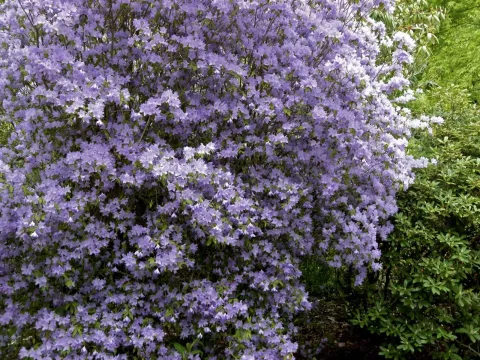
Rhododendron augustinii
Rhododendron augustinii
Rhododendron augustinii is a distinguished member of the Ericaceae family, widely appreciated in horticulture for its spectacular clusters of blue to violet flowers that bloom in late spring.
What the section contains
Rhododendron augustinii
Native to the mountainous regions of Western China, this evergreen shrub thrives in cool, humid environments and naturally adapts to alpine or sub-alpine climatic conditions.
Successful cultivation requires highly specific soil conditions: the substrate must be well-drained, porous, and consistently acidic, with an ideal pH level between 4.5 and 5.5.
Optimal placement involves partial shade or filtered light, protecting the plant from intense midday sun that can damage the foliage and cause premature wilting of flower buds.
Maintenance practices such as annual mulching with pine needles or bark are essential to protect the shallow root system, retain soil moisture, and naturally maintain the necessary acidity.
The primary threat to this species is root rot caused by Phytophthora, which typically occurs in waterlogged soils, leading to a rapid decline in the plant's overall vitality.
Nutrient deficiency, specifically iron chlorosis, is a common issue when the soil pH rises, causing interveinal yellowing of leaves while the veins remain distinctly green.
Pests such as the rhododendron lace bug can cause significant cosmetic and physiological damage by feeding on the underside of leaves, leading to mottled foliage and weakened plant vigor.
Spider mites are also a concern in dry, warm conditions; they can cause foliage stippling and webbing, which necessitates regular monitoring and increased humidity around the plant.
Effective management strategies include cultural practices like ensuring proper soil aeration, avoiding overhead irrigation that encourages fungal growth, and applying integrated pest control if needed.