
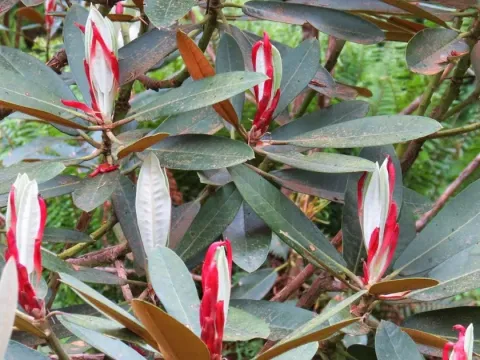
Rhododendron basilicum
Rhododendron basilicum
Rhododendron basilicum is a distinctive evergreen species belonging to the Ericaceae family. Known for its robust, tree-like growth habit and large, thick leaves with a unique indumentum on the underside, it stands out as a premium ornamental specimen in specialized botanical collections and large-scale gardens.
What the section contains
Rhododendron basilicum
This species originates from the high-altitude forests of southwestern China and northern Myanmar. Adapted to mountain conditions, it thrives in environments characterized by high humidity, cool summers, and a misty atmosphere, which are essential factors to consider when attempting to introduce this plant to temperate gardens.
The culture requires acidic soil conditions with excellent drainage to prevent root rot, which is a common fatal issue for this genus. A mixture of pine bark, peat, and sand is highly recommended to replicate the porous forest floor structure of its natural habitat, ensuring both moisture retention and aeration.
Location selection is vital; Rhododendron basilicum prefers dappled shade provided by canopy trees. Direct sunlight, especially during the peak of summer, can cause significant scorch damage to its large foliage, while full shade may inhibit the development of its elaborate floral displays and vigor.
Agrotechnical maintenance focuses on consistent irrigation with non-alkaline water and regular application of specialized fertilizers formulated for ericaceous plants. Pruning should be kept to a minimum, primarily focused on removing dead or damaged wood to maintain the plant's natural structural integrity.
The primary pathological threats include fungal infections such as Phytophthora root rot and various leaf spot diseases caused by excessive soil moisture and poor air circulation. Implementing a preventative schedule with fungicides and improving site drainage are the most effective strategies to mitigate these risks.
Pest pressures primarily involve the rhododendron leafhopper and scale insects, which can weaken the shrub by sap-feeding. Integrated pest management, including regular inspection and the use of horticultural oils or systemic insecticides, is necessary to maintain the plant's health and aesthetic value throughout the growing season.