
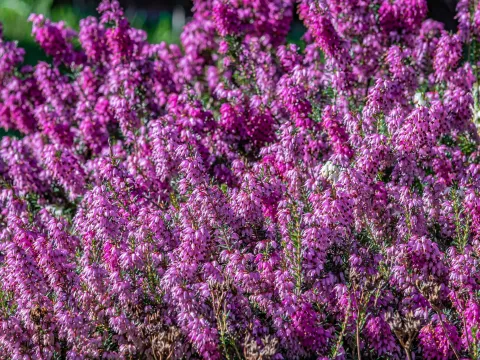
Erica hybrid
Erica hybrids
Erica hybrid (Erica x darleyensis) is a popular evergreen shrub belonging to the Ericaceae family. This hybrid is widely recognized for its winter-flowering habit and ability to adapt to various garden conditions, provided that its specific botanical needs are met.
What the section contains
Erica hybrid
The core requirement for cultivation is a highly acidic soil profile, with an ideal pH range of 4.5 to 5.5. In industrial or garden settings, ensuring perfect drainage is essential, as the fine root systems of these plants are highly susceptible to root rot caused by waterlogging.
Ericas perform best in full sun but appreciate light afternoon shade in hotter climates. They are particularly sensitive to high mineral content in irrigation water, so using rainwater or acidified water is recommended to prevent chlorosis and nutrient deficiency symptoms.
The climate requirement involves protection from desiccating winter winds. While they are hardy, extreme temperature fluctuations can harm the foliage, making site selection crucial for protecting the plant's structural integrity throughout the seasons.
Soil structure should be friable and organic-rich. Incorporating composted pine needles or peat moss at the time of planting ensures that the soil remains loose and acidic, promoting vigorous root development and overall plant longevity.
Phytophthora root rot is the most significant threat to Erica hybrid crops. It usually manifests in poorly drained soils and is characterized by the sudden browning and collapse of the entire plant or specific branches.
Gray mold (Botrytis cinerea) often impacts the plants during cool, humid periods. To mitigate this risk, it is essential to maintain proper airflow between individual plants and prune away any dead or decaying plant material immediately.
Spider mites can become a nuisance during hot and dry summer months, leading to leaf discoloration and a dusty appearance. Regular moisture management and misting can help prevent mite infestations from becoming severe.
Scale insects can occasionally infest the stems, requiring systemic insecticides if the population levels threaten the vitality of the shrubs. Monitoring the lower stems during regular maintenance sessions is highly effective.
To keep the plants resistant to these threats, balanced fertilization using acid-loving plant formulas should be applied sparingly, as over-fertilization can weaken the plant and make it more attractive to pests and pathogens.