
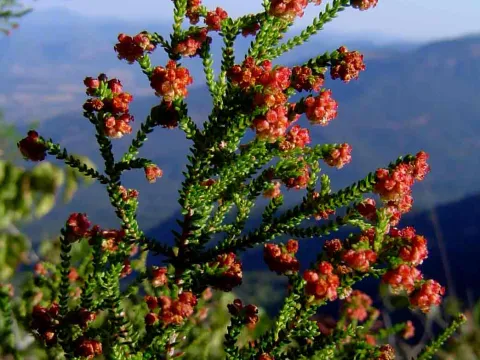
Erica hexandra
Erica hexandra
Erica hexandra is an ornamental perennial belonging to the Ericaceae family. Originating from the mountainous and rocky terrains of Southern Africa, this plant has evolved to thrive in specific environmental conditions that demand specialized agricultural management.
What the section contains
Erica hexandra
The plant strictly requires acidic soil conditions with a pH range typically between 4.0 and 5.5. High levels of calcium or magnesium in the soil can be detrimental to the plant's health, leading to chlorosis and stunted growth, making soil preparation a primary step for successful cultivation.
Optimal environmental conditions involve full sunlight or light partial shade, coupled with excellent soil drainage. The root system is extremely sensitive to waterlogging, which often leads to root rot; therefore, planting on raised beds or slopes is highly recommended in regions with high rainfall.
Botanically, Erica hexandra displays a dense, low-growing habit with needle-like foliage and characteristic six-petaled flowers arranged in clustered racemes. These features allow the plant to conserve moisture effectively, reflecting its adaptation to Mediterranean-like or temperate climates.
Agricultural techniques must prioritize moisture management and soil aeration. Consistent hydration with soft, non-alkaline water is essential, and the application of pine bark mulch helps regulate soil temperature while maintaining the necessary acidic environment for root development.
The primary threats to Erica hexandra involve fungal pathogens, particularly Phytophthora species, which thrive in poorly drained, overly wet soils. These pathogens target the root system, causing rapid decline and plant death if not addressed immediately with systemic fungicides.
Pest pressure is frequently caused by spider mites and scale insects, especially in greenhouse or sheltered conditions. These pests feed on the plant sap, weakening the foliage and creating entry points for secondary infections.
Preventive measures include maintaining adequate spacing between individual plants to allow for airflow, which significantly reduces humidity levels within the canopy and mitigates the risk of fungal outbreaks during transitional weather seasons.
Early detection of infestations is vital for effective management. Using targeted acaricides and insecticides, applied during early infestation stages, helps prevent extensive damage to the evergreen foliage and maintains the plant's ornamental value.
Overall plant health is highly dependent on nitrogen-phosphorus-potassium balance tailored for acid-loving species. Avoiding high-salt fertilizers is crucial, as salt accumulation can cause immediate damage to the sensitive root hairs of the Erica hexandra plant.