
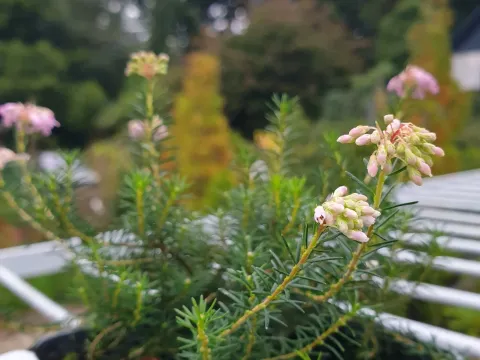
Erica krameri
Erica krameri
Erica krameri is a member of the Ericaceae family, recognized for its evergreen foliage and specialized growth requirements. As a typical heath plant, it thrives in environments that mimic its native ecological niche, characterized by high humidity and nutrient-poor, acidic soils.
What the section contains
Erica krameri
For successful cultivation, the soil pH must be maintained between 4.0 and 5.5. Gardeners typically achieve this by incorporating high amounts of peat, pine needles, or dedicated acidic potting mixes into the planting hole to ensure the root system can effectively absorb nutrients.
Drainage is the most critical factor in the care of Erica krameri. The roots are prone to oxygen deprivation if the soil remains waterlogged, so the planting site must provide rapid water runoff to prevent fungal decay of the root collar.
The plant performs best in full sun or light partial shade, provided the ambient humidity is sufficient. In dry climates, supplemental misting or positioning the plants in a way that creates a microclimate is recommended to avoid heat stress during peak summer temperatures.
In landscape design, this species is utilized for creating low-maintenance borders and heather gardens. Its ability to maintain structure throughout the winter makes it a versatile choice for year-round garden interest in temperate zones.
The most common threats to Erica krameri are root rot pathogens, specifically Phytophthora species, which flourish in poorly drained or overly dense soil conditions.
Insect pests include spider mites, which are particularly problematic in dry indoor environments or sheltered garden spots with poor air circulation, leading to leaf discoloration and drop.
Management of these threats involves rigorous cultural practices, such as ensuring adequate spacing between plants and avoiding overhead irrigation during humid weather to discourage fungal growth.
Fungicides containing metalaxyl or fosetyl-aluminum are effective if root issues are detected early, but preventative measures remain the primary tool for maintaining plant vigor.
Nutrient deficiency, often manifested as chlorosis due to high soil pH or water alkalinity, must be corrected using specialized fertilizers for acid-loving plants to ensure the long-term health of the shrubs.