
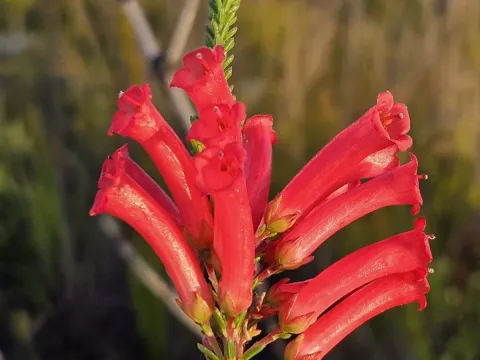
Royal Heath
Erica regia
Royal Heath (Erica regia) is an evergreen ornamental shrub belonging to the Ericaceae family. This species is native to the Cape region of South Africa, specifically found in the unique fynbos biome where it thrives in nutrient-poor and acidic conditions.
What the section contains
Royal Heath
Botanically, this shrub is characterized by its rigid stems and needle-like leaves, producing large, waxy, tubular flowers that provide significant visual interest. The plant typically maintains a compact habit, making it an excellent candidate for specialized horticultural collections.
The primary soil requirement for Erica regia is a well-draining, acidic substrate, ideally composed of a mix of sandy soil and organic peat. It is essential to ensure that the soil does not retain excessive water, as the roots are highly susceptible to rot if drainage is insufficient.
In terms of climate, Royal Heath prefers sunny locations with moderate temperatures and good air circulation. It does not perform well in areas with high humidity or extreme temperature fluctuations, which can stress the plant and make it vulnerable to secondary infections.
Economically, this plant is primarily utilized in the nursery industry for high-end landscape design and as a specimen plant for rock gardens. Due to its specific requirements, it is often grown by enthusiasts who can manage the specialized conditions needed for its long-term survival.
Fungal pathogens represent the most significant threat to Royal Heath, especially those related to root rot caused by poor soil aeration. Preventing waterlogged conditions is the most effective management strategy to ensure the plant remains robust and disease-free throughout its lifecycle.
Pests such as spider mites and mealybugs can occasionally infest the foliage, particularly in glasshouse environments or areas with poor ventilation. Integrated pest management, including regular inspections and the application of appropriate miticides, is advised to maintain plant health.