
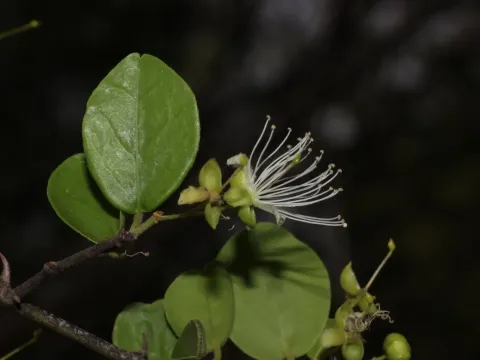
Capparis sepiaria
Capparis sepiaria
Capparis sepiaria is a thorny evergreen shrub belonging to the Capparaceae family. It is known for its resilient nature and dense growth habit, often forming tangled thickets in its native environment.
What the section contains
Capparis sepiaria
The plant originates from tropical and subtropical regions of Asia, including India and the surrounding territories. It is highly adapted to environments with high heat and distinct dry seasons, making it a valuable candidate for arid-land cultivation.
Regarding climate requirements, this species demands significant exposure to sunlight. It thrives best in open areas where it can receive maximum solar radiation, which is essential for its physiological processes.
The soil requirements are specific: the plant requires well-drained, porous soils such as rocky, sandy, or alkaline substrates. It is extremely drought-tolerant and can survive in nutrient-poor environments where water retention is low.
Agronomic management involves careful selection of planting sites. Since the plant is sensitive to frost, its cultivation is restricted to frost-free zones, requiring warm temperatures year-round to ensure healthy development.
The primary threats to Capparis sepiaria are fungal pathogens, specifically those causing root rot, which are triggered by waterlogged conditions. Maintaining an impeccable drainage system is the most effective preventative measure.
Pest pressures often include spider mites and aphids, which frequently target the leaves and tender new growth during periods of prolonged heat or extreme water scarcity.
In certain regions, leaf-feeding caterpillars can cause significant defoliation, necessitating regular scouting to catch infestations before they spread across the entire plantation.
Management strategies should focus on maintaining plant vigor through appropriate spacing and hygiene. Proper air circulation within the shrub canopy is essential to minimize the humidity levels that favor fungal growth.
Monitoring the plant health during the transition from the dry to the wet season is crucial, as this is when the crop is most susceptible to various environmental and biological stresses.