
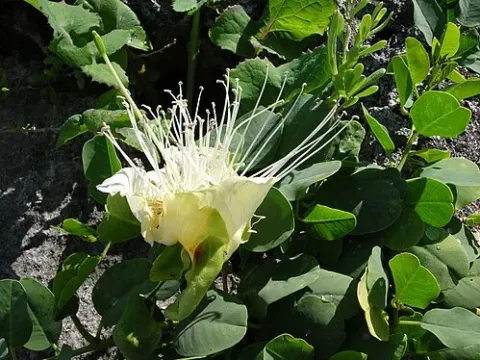
Capparis rheedii
Capparis rheedii
Capparis rheedii is a perennial evergreen shrub belonging to the Capparaceae family. Native to tropical regions, this plant is well-adapted to warm climates where it can thrive in harsh conditions that would be detrimental to many other agricultural crops.
What the section contains
Capparis rheedii
The plant requires well-drained soil, specifically preferring rocky, calcareous, or sandy substrates. It shows a remarkable resistance to drought, thanks to a deep taproot system that explores lower soil layers to reach moisture even during prolonged dry spells.
Optimal growth is observed in full sunlight conditions. The plant is intolerant to shade and excessive moisture, which can lead to rapid rot of the root crown and general decline in health, necessitating careful site selection for commercial plantations.
Agrotechnical management primarily focuses on early-stage irrigation until the plant establishes its root system. Once mature, the crop requires minimal water, and over-irrigation is discouraged as it negatively impacts the intensity of budding and flavor profile.
Proper spacing is crucial to ensure adequate airflow between shrubs, which helps in preventing moisture accumulation. Pruning is also an essential practice to maintain plant vigor, promote new growth, and facilitate easier access during the labor-intensive harvest season.
Harvesting Capparis rheedii is centered on the collection of flower buds before they open into flowers. This task is strictly manual, as the buds are delicate and their maturity is asynchronous across the plant, requiring daily inspections.
Quality control begins at the point of harvest. Workers grade the buds based on size, with smaller, tighter buds being the most desirable for the culinary market. These buds are highly valued for their piquant, tangy flavor after processing.
The harvested product undergoes an immediate post-harvest process, typically involving curing or fermentation in a salt-based brine. This traditional preservation method is vital for developing the characteristic taste and ensuring the product's long-term shelf stability.
The yield of a plantation is heavily dependent on the frequency of harvest sessions. Frequent picking prevents the buds from blossoming, thereby forcing the plant to allocate more energy into producing further buds throughout the vegetative period.
Apart from the buds, the young fruits are sometimes harvested for specific culinary uses, although they represent a secondary market. Efficient management of these cycles ensures a consistent supply throughout the season, maximizing the overall productivity of the plantation.