
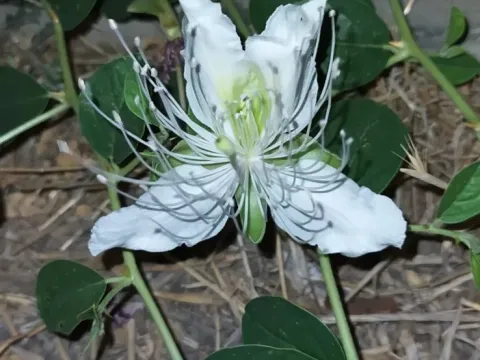
Capparis ovata
Capparis ovata
Sowing seeds of Capparis ovata is primarily done in spring when soil temperatures consistently stay above +15...18°C. Because the seeds possess a hard outer coat, mandatory scarification or prolonged stratification is required to improve germination rates.
What the section contains
Capparis ovata
In commercial conditions, seeds are sown in nutrient-rich substrate within seedling trays or greenhouses, ensuring an optimal moisture level. Transplanting the young seedlings to their permanent outdoor location is conducted only after the threat of night frost has completely passed.
A crucial factor during sowing is selecting a site with maximum insolation, as the crop is extremely light-demanding. Excessive seed burial is discouraged, as it can lead to decay in dense soil types.
The optimal planting pattern for capers involves spaced arrangement to ensure good air circulation. Usually, 2 to 3 meters are left between rows, taking into account the shrub's tendency for vigorous branching.
Propagation is also possible via vegetative methods, specifically cuttings, which helps maintain the specific varietal characteristics of the parent plant and accelerates the plant's entry into the active fruiting phase.
Capparis ovata is a perennial shrub belonging to the Capparaceae family, adapted to the extremely dry and hot conditions of the Mediterranean and Central Asia. The crop is characterized by a powerful root system capable of extracting moisture from deep soil layers.
The plant prefers poor, rocky, or sandy soils with an alkaline reaction. Waterlogging is fatal for this crop, so sites with high groundwater levels are strictly unsuitable for establishing commercial plantations.
Normal development of the caper bush requires air temperatures in the range of +25...+35°C. The plant excels in direct sunlight and withstands long periods of drought, demonstrating a high degree of xerophytism.
During the winter period, the crop can withstand short-term temperature drops; however, in regions with harsh winters, it requires reliable protection or cultivation in a protected environment. Cold winds may damage young shoots.
General care consists of loosening the inter-rows to prevent soil crusting and removing weeds that compete with the caper bush for nutrients during the initial growth stages.
The economic utilization of capers is focused on harvesting unopened flower buds, which are a valuable delicacy. The yield per mature bush depends on the plant's age and the quality of agronomic practices.
The peak productivity of the caper bush occurs from late spring until late autumn. It is important to note that the more frequently buds are harvested, the more actively the plant stimulates the formation of new ovaries, which increases the total output.
The harvested product requires immediate processing, as buds wilt quickly and lose their commercial value. The traditional method of preservation is pickling in salt, vinegar, or brine.
In addition to buds, young shoots and fruits of capers are consumed in some regions, although their share in total production volume is significantly lower. Quality raw materials must be firm, small, and undamaged.
The economic efficiency of cultivating this crop is determined by the high market value of the finished product, making the caper bush a promising niche crop for arid zones.
Common pests for Capparis ovata include various species of aphids that damage young leaves and buds by sucking cell sap. Control is carried out by applying biological insecticides during the early morning hours.
Root rot poses the greatest danger when irrigation regimes are disrupted and soil drainage is poor. Fungal infections develop under conditions of high humidity and insufficient ventilation in dense plantings.
Powdery mildew can affect leaves during periods of high humidity, leading to premature defoliation. Timely pruning is recommended for prophylaxis to improve the plant's light exposure.
Phytophagous insects can cause mechanical damage to the buds, which reduces the quality of the commercial product. The use of pesticides on caper plantations is limited, as buds are harvested frequently and systematically.
- Aphids (Aphidoidea)
- Root rot (fungal pathogens)
- Powdery mildew
- Cutworms
Harvesting caper buds is an exclusively manual and labor-intensive process. Workers must inspect the plantation daily because the buds reach market maturity very quickly, and missing the window results in the plant flowering.
For sorting, buds are classified by size: the smallest specimens are considered the most valuable, as they possess a more delicate flavor and firm texture. Larger buds are valued lower.
Harvesting begins early in the morning to prevent the collected raw material from overheating in the sun. A well-organized harvesting process allows the fruiting period to be extended over several months.
After collection, buds are sorted, washed, and sent to the fermentation stage. This process takes several weeks and is necessary to neutralize the bitter glycosides contained in the fresh parts of the plant.
The finished product is packaged in airtight containers. Properly processed capers retain their organoleptic properties for a long time, remaining a sought-after culinary ingredient.