
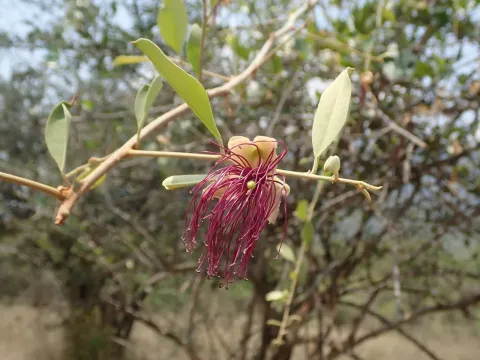
Ceylon caper
Capparis zeylanica
The Ceylon caper (Capparis zeylanica) is a woody shrub belonging to the Capparaceae family, native to the tropical regions of India, Sri Lanka, and Southeast Asia. It is a highly resilient plant known for its ability to thrive in challenging, dry environments.
What the section contains
Ceylon caper
This species is well-adapted to arid climates and rocky or sandy soil types, making it a valuable crop for reclaiming marginal lands. The plant exhibits exceptional drought tolerance due to its deep root architecture and waxy leaf coatings.
Cultivation requires full sunlight exposure to maintain vigorous growth and optimal flower production. Soils must provide excellent drainage, as the species is highly susceptible to root damage in waterlogged conditions.
Botanically, it is recognized by its climbing or scrambling habit and the presence of stipular spines at the base of the leaves. These thorns serve as a defense mechanism, while the large, fragrant flowers attract various pollinators.
In terms of agricultural utility, the plant is valued for its medicinal properties and potential applications in herbal research. It is a perennial shrub that requires minimal soil fertilization when grown in its native habitat.
The crop is vulnerable to various leaf-chewing insects, which can cause significant defoliation if left uncontrolled during the early stages of seasonal growth.
Fungal pathogens associated with soil humidity pose a major risk; symptoms typically include chlorosis, wilting, and eventual necrosis of the root system if drainage is inadequate.
Mites and aphids may also colonize the plant, particularly during dry seasons, necessitating careful monitoring to prevent stress on the plant's overall physiology.
Preventative management includes proper spacing of plants to ensure airflow and reducing humidity levels within the canopy to suppress the development of fungal spores.
Integrated pest management strategies are recommended, focusing on maintaining plant health through optimal irrigation and selective pruning to eliminate infected areas.