
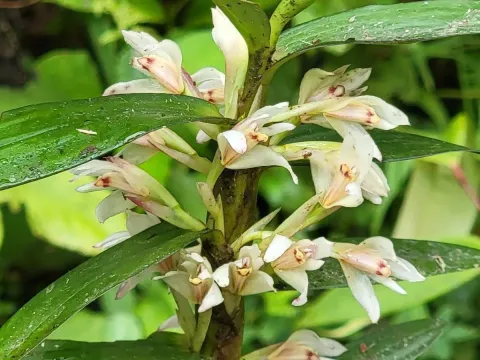
Camaridium
Camaridium
Camaridium is a genus of epiphytic plants belonging to the Orchidaceae family. These plants are native to the tropical forests of Central and South America, where they typically grow on tree trunks or in humid rocky habitats.
What the section contains
Camaridium
Cultivation requires conditions that mimic their natural tropical environment. They thrive under bright, filtered light and do not tolerate direct, intense sun, which can scorch their delicate foliage. A stable ambient temperature between 18°C and 25°C is ideal for growth.
Humidity is a critical requirement, ideally maintained between 60% and 80%. Consistent airflow is necessary to prevent the buildup of stagnant, humid air, which can lead to fungal issues. Using a humidifier or regular misting can help maintain these levels.
The planting medium must be highly porous to ensure healthy root respiration. A mix consisting of pine bark, charcoal, and sphagnum moss is commonly recommended. The roots need to dry out slightly between waterings to prevent rot and promote root health.
The agricultural and ornamental importance of Camaridium lies in its use as a high-value botanical specimen for greenhouses and private collections. Its unique floral structure and relative resilience make it a favored choice among orchid enthusiasts worldwide.
The primary threats to Camaridium are related to incorrect watering practices, leading to root rot and pseudobulb decay. Proper drainage is essential, and one must never allow the plant to sit in standing water within the pot or saucer.
Pests such as mealybugs, spider mites, and scale insects frequently target these orchids. Integrated pest management, including regular inspection and the use of targeted miticides or insecticidal soaps, is essential for maintaining plant health in an indoor or greenhouse setting.