
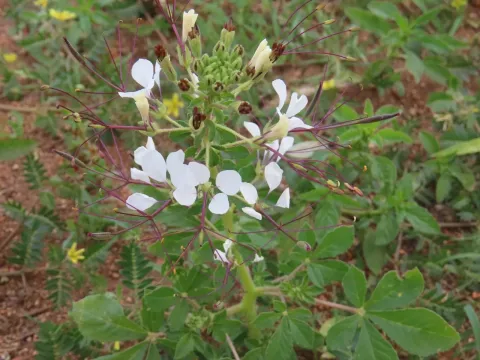
Gynandropsis
Gynandropsis
Gynandropsis (Gynandropsis gynandra) is a heat-loving crop, making it essential to sow seeds only once soil temperatures have consistently risen in late spring.
What the section contains
Gynandropsis
Direct seeding is typically performed in open fields after all risk of frost has passed, ensuring stable environmental conditions for germination.
Seeds are sown at a shallow depth of 1 to 2 centimeters, which promotes efficient emergence and helps establish a uniform plant density in the field.
In regions with shorter growing seasons, starting seedlings in greenhouses four to six weeks before the transplanting date is a highly recommended practice.
To enhance germination rates, soaking seeds in lukewarm water for several hours prior to sowing is a common agronomic technique used by growers.
As a member of the Capparaceae family native to tropical Africa and Asia, this crop thrives in environments with high levels of direct sunlight.
It performs best in fertile, well-drained soils with a neutral pH, as the root system is highly sensitive to waterlogging and lack of oxygen.
While Gynandropsis is recognized for its drought tolerance, consistent moisture is necessary during the vegetative phase to maximize leaf yield and quality.
Nitrogen fertilization is critical for supporting the rapid growth of succulent green biomass, which is the primary economic component of this plant.
The optimal temperature range for metabolic activity lies between +25°C and +30°C, with growth rates decreasing significantly below +15°C.
The primary economic focus for this crop is the production of edible young leaves and tender shoots, which are harvested regularly for fresh market use.
Yield productivity is heavily influenced by planting density and the nutritional status of the soil, with intensive management resulting in high leaf output.
Harvesting usually begins 30 to 45 days post-emergence, showcasing the crop's fast-cycle nature and its suitability for multiple production rotations.
The plant exhibits excellent regenerative properties, allowing for multiple harvests from the same set of plants before the onset of the flowering stage.
Implementing proper spacing and pruning of early flower buds can significantly increase the total biomass yield per hectare by focusing energy on vegetative growth.
Common pests affecting Gynandropsis include aphids and spider mites, which frequently target the soft tissues of new terminal shoots during the peak season.
High humidity and poor air circulation within dense plantings can lead to fungal leaf spot diseases that compromise the quality of the harvest.
Integrated pest management, including the use of targeted biological controls and early detection, is the most effective way to protect crop integrity.
Preventative strategies such as rotating crops and ensuring optimal spacing between plants are essential to mitigate the spread of soil-borne pathogens.
Early-stage seedlings should be monitored closely, as they are susceptible to damage from various beetles that thrive in the same environmental niches.
Harvesting is performed manually by selecting the youngest, most tender leaves and stems to maintain high culinary standards for the consumer.
Collecting produce during the early morning hours is ideal to ensure maximum turgor pressure and extend the post-harvest shelf life of the greens.
Post-harvest handling must be quick, as the harvested biomass is highly perishable and susceptible to rapid wilting when exposed to high heat.
In various agricultural traditions, the harvested material is either consumed fresh or air-dried to create a stable, nutritious food ingredient.
Seed production is managed separately by allowing select plants to reach full maturity, resulting in long, slender pods containing numerous small seeds.