
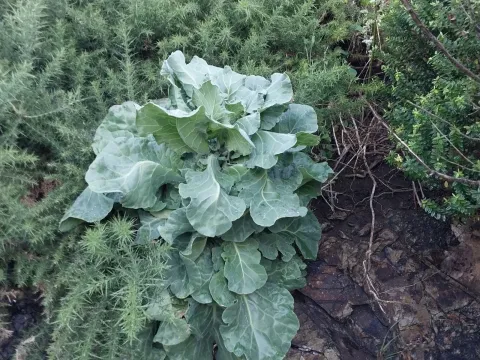
Marrowstem Kale
Brassica oleracea L. (Marrowstem Kale Group)
Marrowstem Kale is a biennial member of the Brassicaceae family, primarily grown as a high-protein forage crop for livestock. Originally derived from wild leafy brassicas of the Mediterranean region, this crop is valued for its ability to produce high yields of succulent stems and foliage. It is widely cultivated across temperate regions for both summer and autumn grazing.
What the section contains
Marrowstem Kale
Sowing typically takes place in early spring, once the soil has warmed and is workable. The seeds are drilled at a shallow depth of approximately 2-3 cm to ensure even germination and early establishment. Proper spacing is essential to allow the plants to develop their characteristic thick stems, which hold significant nutrient reserves for winter consumption.
This crop thrives in cool, moist climates and is highly regarded for its frost tolerance, often surviving temperatures as low as -8°C. It prefers well-drained, fertile loamy soils with a near-neutral pH level. If the soil is too acidic, liming is required to prevent the development of clubroot, which can devastate entire fields of kale.
Water management is critical; while the crop is hardy, yield stability is heavily dependent on adequate precipitation during the summer growth phase. Nitrogen availability is another key factor, as the plant requires sufficient nutrients to sustain its rapid vegetative growth. High-yielding crops typically respond well to both organic amendments and targeted mineral fertilization.
Marrowstem Kale is renowned for its high biomass production, with yields frequently reaching 60-100 tonnes per hectare of green fodder. The crop remains highly palatable and nutrient-dense, providing an excellent source of energy and protein for ruminants when pasture growth slows down. Its adaptability to various harvest schedules makes it a flexible tool in farm management.
The primary insect threats include flea beetles, which can decimate seedling crops, as well as aphids and cabbage white caterpillars. Integrated pest management strategies, such as early-season scouting and timely insecticide application, are often necessary to protect the leaf canopy. Crop rotation remains the most effective defense against soil-borne pests and long-term infestation.
Fungal diseases like clubroot and downy mildew pose significant risks to productivity. To mitigate these threats, producers should select disease-resistant varieties and ensure that cruciferous crops are not planted in the same field more than once every three to four years. Maintaining soil health through proper drainage is essential for minimizing the risk of bacterial soft rot.
The harvesting process generally begins in late summer and can extend into early winter, as the plant remains nutritionally viable even after the first frosts. It is commonly harvested using forage harvesters, which chop the stems and leaves into manageable segments for immediate feeding or ensiling. This late-season availability is a major advantage for farmers looking to extend their grazing season.