
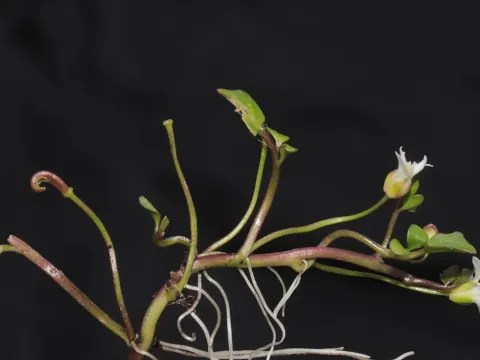
Buenos Aires bittercress
Cardamine bonariensis
Sowing of Buenos Aires bittercress should ideally take place in early spring when the soil temperature reaches 8–10 degrees Celsius.
What the section contains
Buenos Aires bittercress
For earlier production, growers can practice autumn sowing, placing the seeds in the ground before the first frost arrives in late October.
Seeds should be sown at a depth of no more than 1 cm to ensure proper germination, as they are sensitive to deep burial.
Maintaining a row spacing of approximately 20 to 25 cm is recommended to facilitate proper air circulation and easier weeding.
Consistency in moisture levels is critical during the first two weeks after sowing to ensure uniform seedling emergence.
As a member of the Brassicaceae family, Cardamine bonariensis thrives in fertile, well-drained loamy soils with a neutral pH balance.
This crop requires consistent moisture throughout the growing season and should not be allowed to dry out completely in the upper soil profile.
The ideal temperature range for vegetative growth is between 15 and 22 degrees Celsius, favoring cool to moderate climatic conditions.
While it prefers full sun, the plant can tolerate partial shade in hotter climates to prevent the leaves from becoming too spicy or tough.
Minimal fertilization is required, but incorporating organic compost into the soil before sowing will support vigorous plant development.
Crucifer flea beetles are the most common pests that can severely damage young seedlings, necessitating regular monitoring and early intervention.
Fungal diseases, such as downy mildew, can occur if the humidity levels are too high and the plants are spaced too closely together.
Effective weed management is essential because many common weeds act as hosts for pests and diseases that affect the Brassicaceae family.
Slugs and snails can pose a significant threat during periods of heavy rain, especially when the plants are still in the early growth stages.
Integrated pest management strategies, focusing on biological controls, are highly recommended to keep the crop healthy and safe for consumption.
Harvesting for fresh greens is performed by picking the leaves individually before the plant reaches the bolting stage and starts flowering.
If the goal is to produce seeds, wait until the seed pods begin to turn brown and dry, but collect them before they burst open naturally.
Freshly harvested greens should be kept cool and consumed or sold promptly to maintain maximum freshness and nutritional quality.
Seed storage requires a dry, dark, and cool environment to ensure the seeds remain viable for the next planting season.
Timely harvest ensures that the leaves maintain their best culinary properties, as they tend to become more bitter once the plant begins to flower.