
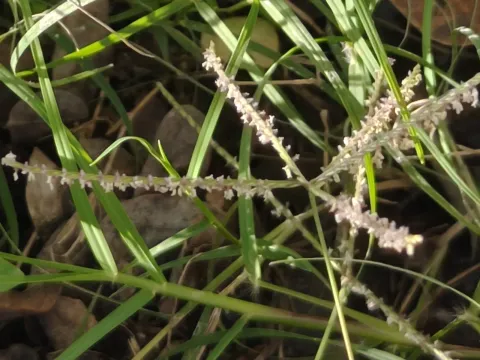
Brachyachne
Brachyachne
Brachyachne is a genus of annual or perennial grasses belonging to the Poaceae family. These plants are typically low-growing and often form dense, creeping mats, making them effective soil coverers in arid environments.
What the section contains
Brachyachne
The genus is predominantly found in tropical and subtropical regions of Australia and Africa. It is well-adapted to harsh environments, showing high tolerance to poor soil quality and prolonged periods of low rainfall.
Botanically, Brachyachne is distinguished by narrow, linear leaves and characteristic spicate inflorescences. These structures are designed to optimize survival in regions with intense radiation and heat.
The root system is primarily shallow but efficient at moisture uptake immediately after sporadic rainfall events. This survival strategy allows the plant to remain dormant during long droughts and rapidly regenerate when moisture becomes available.
Agricultural use focuses on its role as a forage crop. In native ranges, it provides essential nutritional biomass for grazing livestock, often serving as a secondary or emergency feed source in challenging landscapes.
The sowing schedule for Brachyachne is dictated by the onset of the wet season. Seeds require warm soil temperatures, generally between 22 and 30 degrees Celsius, to achieve uniform and rapid germination.
Field preparation involves minimal tillage to maintain soil structure and prevent erosion. Seeds should be sown shallowly, ensuring they remain in contact with moisture without being buried too deeply, which could inhibit emergence.
Seeding rates should be adjusted based on whether the goal is to establish a monoculture pasture or to improve existing grassland. Higher densities are recommended to ensure rapid ground cover and suppress competitive weeds.
Management practices during the growth phase require controlled grazing. Given the plant's growth habit, excessive trampling immediately after germination can damage the stand and reduce long-term productivity.
Fertilization is rarely necessary in extensive grazing systems. However, in improved pastures, moderate nitrogen applications during the vegetative phase can significantly enhance leaf density and overall forage yield.