
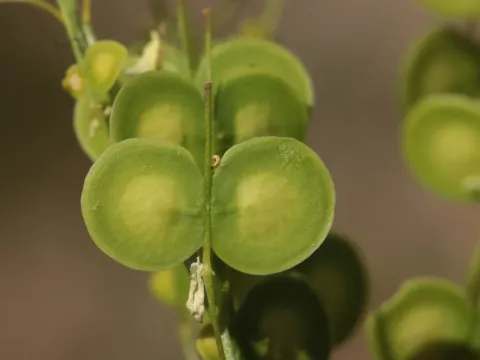
Buckler mustard
Biscutella laevigata
Buckler mustard (Biscutella laevigata) is a perennial herbaceous plant belonging to the Brassicaceae family. In the wild, it is primarily found in the mountainous regions of Central and Southern Europe, favoring limestone substrates and rocky screes.
What the section contains
Buckler mustard
This crop is a classic calcicole, meaning it requires soils with high lime content for successful growth. The plant is extremely sensitive to excessive moisture and waterlogging, which makes the provision of high-quality drainage essential during cultivation.
Optimal conditions for development include open areas with plenty of direct sunlight. The plant is well-adapted to the sharp temperature fluctuations between day and night that are characteristic of subalpine and alpine climatic zones.
Biologically, the plant features a rosette of basal leaves and an upright stem that can reach heights of 20 to 40 centimeters. The flowers are arranged in racemes and exhibit the characteristic structure and yellow coloration typical of many cruciferous plants.
The primary economic use of this crop is currently limited to ornamental gardening, particularly in the construction of rock gardens and alpine beds. It is not currently cultivated as a field crop on an industrial scale, remaining primarily a subject of botanical interest.
Typical threats to this species include fungal diseases of the root system caused by soil saturation. Excess moisture promotes the development of root rots, which can lead to the rapid decline and death of the plant.
Among pests, the greatest danger is posed by insects typical of the Brassicaceae family, including flea beetles and the larvae of certain cabbage flies. Damage to the vegetative mass significantly reduces the plant's ornamental appeal and overall vitality.
To prevent the spread of pests in garden settings, regular monitoring and targeted application of insecticides are recommended. Special attention should be paid to the condition of the root collar during the spring snowmelt period.
Disease management in a controlled environment is based on strict adherence to agrotechnical standards, specifically the selection of appropriate soil with a neutral to slightly alkaline reaction. Fungicide application is only necessary during significant infection outbreaks.
An important aspect of plant protection is the timely removal of weeds, which can act as a reservoir for pests and compete for essential nutrients. This plant does not tolerate competition from aggressive invasive weeds.