
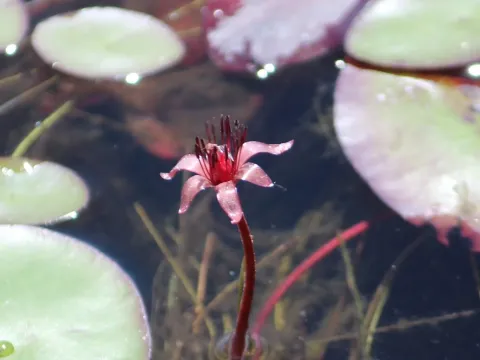
Brasenia schreberi
Brasenia peltata
Brasenia schreberi, commonly known as water shield, is a perennial aquatic plant belonging to the Cabombaceae family. It is propagated primarily through seeds or by the division of rhizomes.
What the section contains
Brasenia schreberi
In a controlled aquaculture setting, seeds are sown in the muddy substrate of ponds during the spring season once water temperatures consistently exceed 15–18 degrees Celsius.
For vegetative propagation, rhizomes are planted into the silt at a depth of approximately 10–15 centimeters, ensuring adequate spacing between individual plants to promote robust surface leaf expansion.
It is essential to use high-quality planting stock and maintain appropriate population density to ensure healthy growth and prevent inter-plant competition for nutrients.
The successful establishment of a Brasenia plantation requires a site with still or slow-moving water, which prevents the disturbance of the root system and promotes stable growth.
Water shield requires specific environmental conditions, thriving best in still or slowly moving, slightly acidic to neutral waters with a nutrient-rich muddy bottom.
As a thermophilic plant, it requires warm climates with plenty of sunlight; therefore, commercial cultivation is most successful in tropical and subtropical regions.
Light availability is a critical factor for successful photosynthesis, as the plant relies on its floating leaves to capture solar energy throughout the day.
The water chemistry must be monitored to ensure an optimal pH level, which facilitates the development of the thick, gelatinous mucilage that coats the undersides of the leaves and stems.
The water level must be kept relatively stable, as significant fluctuations can damage the stems or interfere with the production of the mucilaginous substance.
The yield of Brasenia schreberi is measured by the quantity and quality of young, unopened leaf shoots harvested throughout the growing season.
High yields depend significantly on climate stability and the abundance of nutrients in the aquatic substrate, often enhanced by the natural accumulation of organic matter.
With proper management, a single water shield plantation can produce multiple harvests within one growing season, significantly increasing overall farm profitability.
Producers aim for frequent harvesting cycles to ensure that the harvested shoots are always at the peak of their culinary quality, characterized by the dense mucilaginous coating.
Efficient management of the water area and regular harvesting stimulates the plant to produce new shoots, ensuring a steady supply of high-quality produce.
The crop is susceptible to various aquatic pests, including larvae that feed on tender leaves, and competitive algae that can outcompete the plant for light and nutrients.
Pathogenic fungi and bacteria may affect the stems and leaves, especially in conditions where water circulation is poor and stagnant zones develop.
Water-dwelling herbivores, such as certain species of fish and waterfowl, can cause physical damage to the root system and young shoots, often necessitating protective measures.
Pollution from agricultural runoff or industrial waste can alter water chemistry, causing severe stress to the plants and potentially leading to mass mortality.
Early frosts or significant drops in water temperature towards the end of the season can prematurely terminate the growing cycle and reduce the total harvest volume.
Harvesting is performed exclusively by manual labor, as mechanical methods would destroy the fragile and highly valued mucilage coating on the plant shoots.
Workers typically navigate the ponds on flat-bottomed boats, carefully identifying and cutting only the young shoots that have reached the perfect stage for consumption.
The harvested shoots are immediately placed into containers filled with cold water to maintain their freshness and prevent the dehydration of the gelatinous layer.
Timing the harvest is crucial; it is often conducted in the early morning to capture the best quality shoots before high temperatures affect the plant's metabolism.
Post-harvest procedures include rapid sorting and rinsing, followed by either direct distribution to markets or preservation techniques to ensure the longevity of the delicate product.