
Mizuna and turnip hybrid
hybrids between Brassica rapa L. subsp. nipposinica (L. H. Bailey) Hanelt and Brassica rapa L. subsp. Rapa
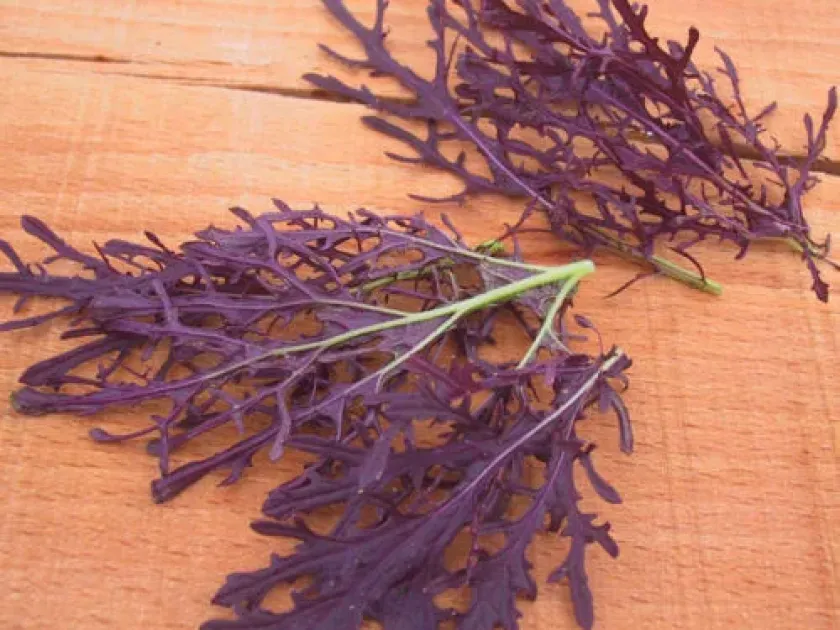
Description
Sowing dates
Sowing this hybrid, which belongs to the Brassicaceae family, is typically carried out in early spring as soon as the soil reaches 8–10 degrees Celsius. The crop features a short vegetation period, so for a continuous harvest, seeds are sown every 2–3 weeks until the onset of summer heat.
In the autumn, sowing resumes in late August when the intensity of sunlight decreases, which prevents premature bolting. The culture is highly sensitive to photoperiod length, so the coolest periods of the season are optimal for forming succulent leaf rosettes.
The planting scheme depends on the purpose of use: for "baby leaf" production, a row method with 10–15 cm spacing between plants is used. When growing larger specimens, the distance is increased to 25–30 cm to provide sufficient space for nutrition.
The sowing depth in light soils is about 1–1.5 cm. Adequate moisture in the seedbed is a mandatory requirement, as small seeds quickly lose viability if the topsoil dries out, leading to uneven germination.
The temperature regime during the germination period plays a key role: optimal values are 15–20 degrees. If these values are exceeded, seedlings may stretch, and the quality of the leaf blade significantly decreases due to rapid bolting.
Growing requirements
The mizuna and turnip hybrid prefers loose, fertile loamy or sandy loam soils with a neutral or slightly acidic pH. It is important to avoid areas with stagnant water, as the root system is sensitive to oxygen deficiency and prone to rot.
The plant is cold-hardy and can withstand short-term frosts down to -3…-5 degrees Celsius without losing its marketable appearance. However, stable soil moisture is essential for the full development of the rosette throughout the growing season.
The crop requires sunlight, but shade is preferred during summer heat. Excessive light combined with high temperatures stimulates active growth of flower stalks, making the leaves coarse and unsuitable for consumption.
Agricultural practice includes regular loosening of rows to improve soil aeration, which is critical for the development of the root and the succulent leaf rosette. Mulching plantings helps conserve moisture and prevents overheating of the root zone.
Fertilizer application should be moderate. An excess of nitrogen during the harvest formation phase can lead to nitrate accumulation, so it is better to use balanced complex formulations with a predominance of potassium to strengthen the plant's cell walls.
Yield
The yield of the hybrid varies greatly depending on the cultivation method and regional climatic conditions. On average, one can obtain from 1.5 to 3 kg of green produce per square meter of open ground in a single cutting cycle.
With intensive cultivation technologies, especially in greenhouses, regrowth of leaves after cutting is possible. This allows for harvesting up to 3–4 times during one growing season, provided that proper fertilization is maintained.
The market value of the hybrid is determined by the succulence and tenderness of the leaf blade. Maximum output of marketable produce is observed when leaves are harvested at 30–45 days of age when they reach a height of 15–20 cm.
An important factor in maintaining high yield is controlling competition from weeds, which can significantly suppress the growth of young plants in the first weeks of the culture's life.
Modern breeding achievements allow for more uniform plant sizes and weights, which facilitates mechanized harvesting and reduces losses during post-harvest processing.
Main diseases and pests
The main pests of the culture are cruciferous flea beetles, which can completely destroy seedlings in a matter of days. Protection involves both agrotechnical methods (using row covers) and biological control agents.
Slugs and snails pose a serious threat in conditions of high humidity and rainy weather. They damage both delicate leaves and the base of the rosette, often leading to rot due to secondary infection.
Among fungal diseases, clubroot (Plasmodiophora brassicae) is the most dangerous, especially in acidic soils. Prevention requires strict crop rotation (returning to the same site no sooner than every 4 years) and liming the soil before sowing.
Downy mildew can affect crops under dense planting and poor ventilation. The disease is characterized by yellow spots on the leaves, requiring immediate improvement of ventilation in the plot.
Aphids are also frequent visitors to Brassica rapa hybrids. Small insects suck juices from young shoots, causing deformation, so regular inspection of the plantings is an essential part of agronomic control.
Harvesting
Harvesting is primarily carried out by selective cutting, removing outer developed leaves. This approach allows the central part of the rosette to continue growing and forming new shoots, increasing the overall lifespan of the bed.
Mass harvesting is performed when plants reach technical maturity. In industrial scales, plants are pulled out entirely with the root if the hybrid's selection suggests using both parts.
Harvesting is best planned for morning hours while air temperature remains low and leaves are saturated with moisture. This ensures maximum turgor and long-term preservation of the marketable appearance after transport.
After cutting, the produce should be cooled immediately to stop tissue respiration and slow down wilting. Storage at 0–2 degrees Celsius allows keeping the leaves fresh for about a week.
The hybrid's use in cooking is diverse: it is used in fresh salads, stir-fried as a side dish, or as an ingredient in soups. Thanks to the combined flavors of mizuna and turnip, the crop is valued for its piquant, slightly mustard-like taste.