
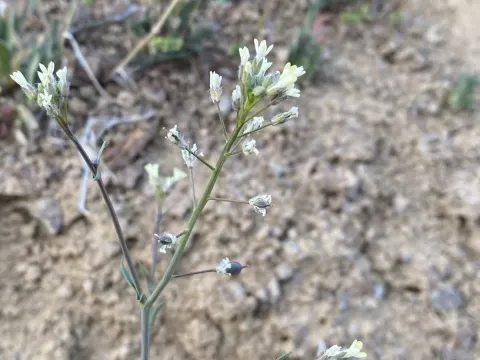
Camelina rumelica
Camelina rumelica
Camelina rumelica is a member of the Brassicaceae family, valued as a resilient oilseed crop for sustainable agricultural systems.
What the section contains
Camelina rumelica
The optimal sowing time is early spring when the soil temperature consistently reaches 5–8 degrees Celsius, ensuring vigorous germination.
Being cold-hardy, the crop can withstand early spring frosts, which allows growers to take advantage of early moisture in the soil profile.
The seeding rate typically ranges from 8 to 12 kilograms per hectare, depending on local climate conditions and the chosen sowing method.
It is crucial to plant the seeds at a shallow depth of 1–2 centimeters, as deep planting significantly reduces emergence rates and crop density.
Camelina rumelica is highly drought-tolerant, making it an excellent candidate for regions prone to moisture deficit during the growing season.
The plant adapts to a wide variety of soil types, but it achieves the best results on well-drained sandy loam or loamy chernozem soils.
Adequate sunlight is essential for development, so maintaining proper plant spacing is necessary to avoid competition and poor stem development.
While not heavily demanding, the crop responds positively to balanced mineral fertilization, particularly phosphorus, which supports root growth.
Effective weed control during the early stages of development is the most significant agronomic factor for achieving high potential yields.
The yield potential of Camelina rumelica generally fluctuates between 1.5 and 2.0 tonnes per hectare depending on site-specific management.
With an oil content of 35–40 percent, it provides a high-value raw material for both industrial bio-lubricants and food-grade oil production.
Uniform stand establishment is the primary driver of high yields, which is achieved through careful seedbed preparation and precision sowing.
Crop stability under changing weather conditions makes it an economically reliable component in modern crop rotation systems.
Regular field scouting and appropriate agronomic inputs help to maximize the yield potential while ensuring consistent seed quality.
Flea beetles are the most common early-season pest, capable of causing severe damage to seedlings shortly after germination occurs.
The pollen beetle can pose a risk during the flowering stage, requiring careful observation and timely intervention if threshold levels are exceeded.
Downy mildew and fusarium wilt are the most frequent diseases, typically triggered by high humidity and poor drainage in the field.
Preventative measures, such as maintaining a 3–4 year crop rotation cycle, are the most effective way to manage potential pest and disease pressure.
- Monitoring for early signs of insect damage.
- Applying targeted integrated pest management strategies.
- Avoiding fields with history of cruciferous weeds.
Harvesting is typically performed using a combine harvester when the seeds reach full maturity and moisture drops below 12 percent.
Timing is critical because the pods of Camelina rumelica are prone to shattering, which can lead to substantial losses if harvesting is delayed.
Combine settings should be carefully calibrated for small, lightweight seeds to prevent excessive cleaning losses and mechanical damage.
Post-harvest cleaning is mandatory to remove green weed matter, which can otherwise increase moisture levels and jeopardize storage safety.
Proper aeration in storage facilities is required to preserve the oil quality and prevent the seeds from heating and degrading over time.