
Bristlegrass
Setaria decipiens
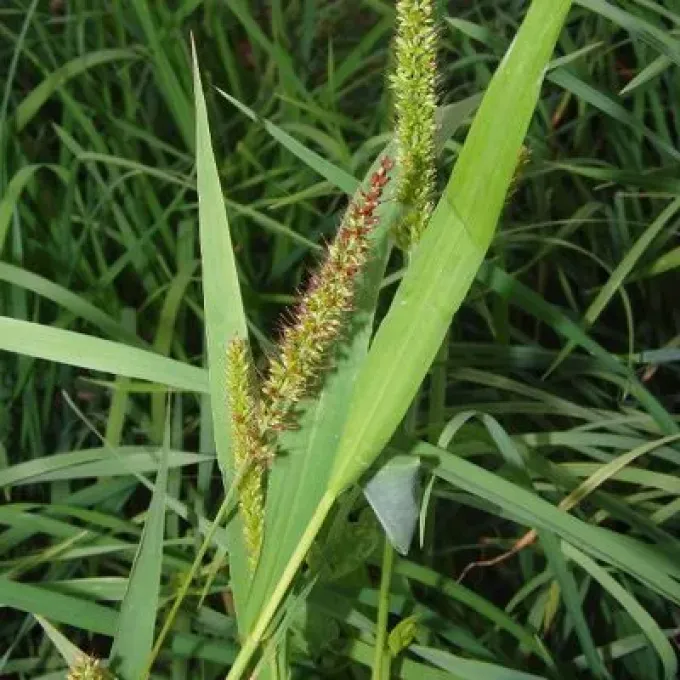
Description
Sowing dates
Sowing of Setaria decipiens is carried out in well-warmed soil once the threat of spring frosts has completely passed. The optimal time frame is late May or early June, when soil temperatures reach 12–15 °C.
It is crucial to maintain a sowing depth of 2 to 3 centimeters depending on soil texture. Planting seeds too deeply significantly decreases germination energy and reduces the final density of the grass stand.
Seed rates vary depending on the intended use of the crop. For green forage production, higher sowing rates are used to ensure a dense canopy that suppresses weeds in the early stages of plant growth.
Post-sowing rolling of the soil is a mandatory agricultural operation to improve seed-to-soil contact. This practice is vital for ensuring uniform moisture intake, especially during dry spring weather conditions.
This crop is characterized by high initial growth vigor, which allows it to establish a strong root system quickly, enabling the plants to efficiently access moisture from deeper soil layers.
Growing requirements
Setaria decipiens belongs to the Poaceae family and is a warm-season grass well-adapted to temperate climates. It exhibits remarkable drought tolerance, making it a valuable option for regions facing water scarcity.
The plant performs best in fertile, well-aerated sandy loam or loamy soils. It performs poorly in waterlogged, swampy areas or heavy clay soils where water accumulation often leads to root rot.
The optimal soil pH for this species ranges from 6.0 to 7.5. In acidic soils, development is significantly retarded, necessitating pre-sowing liming to adjust soil reaction to more favorable levels.
Light requirements are high, so the crop should be planted in open fields. Shade from trees or tall neighboring crops can lead to reduced biomass accumulation and thinner stems, lowering forage quality.
Fertilization strategies should focus on nitrogen inputs to stimulate vigorous vegetative growth. Phosphorus and potassium applications help develop robust root systems and improve overall plant structural integrity.
Yield
Yields of bristlegrass depend heavily on agricultural practices and weather conditions during the growing season. With proper management, the crop can generate high biomass yields within a short timeframe.
Average green mass production ranges from 20 to 35 tons per hectare under favorable conditions. Its high nutrient content and palatability make it a preferred component in livestock summer diets.
The crop is known for its ability to regrow rapidly after mowing, which often allows for a second harvest during seasons with sufficient moisture. This feature enhances the economic return per hectare.
Its resilience to adverse environmental conditions ensures stable production even during summer heatwaves when many other temperate grasses enter a dormant phase to survive extreme heat.
Harvesting at the early heading stage is recommended to maximize the balance between total biomass and the crude protein content necessary for high-quality livestock nutrition.
Main diseases and pests
Common diseases affecting this crop include various rusts and leaf spots, which typically flourish in high-humidity environments. Prevention strategies include crop rotation and controlling weed hosts.
In terms of pests, cereal flies and aphids are the primary threats, damaging young plants and sucking sap from tender leaves. Infestations can lead to thinned stands and reduced yield potential.
Spatial isolation from other grass crops is a recommended practice to reduce the spread of diseases and migration of insect pests into the bristlegrass fields throughout the growing season.
Chemical control measures should be used judiciously, adhering to strict safety protocols and pre-harvest intervals. Regular field scouting is necessary to detect outbreaks before they spread significantly.
Integrated pest management, including the use of resistant varieties and mechanical weed control, can significantly reduce the need for heavy pesticide applications, lowering operational costs.
Harvesting
Harvesting for green fodder should be conducted at the early heading stage to maintain an optimal balance of digestible nutrients. Delaying harvest leads to stem lignification and poorer feed quality.
For hay production, modern equipment such as mower-conditioners is used to speed up the drying process. Rapid drying preserves the color, fragrance, and essential vitamin profile of the grass.
When ensiling, it is vital to chop the material finely and ensure adequate compaction within the silo. Anaerobic conditions are essential for proper lactic acid fermentation and long-term storage.
Seed harvesting requires careful monitoring of grain moisture, ideally keeping it around 14–16 percent at the time of threshing to prevent mechanical damage and ensure safe storage during the winter.
After harvesting, prompt transport and processing are necessary to prevent degradation from moisture or mold. Proper post-harvest management ensures high-quality feed for the upcoming winter season.