
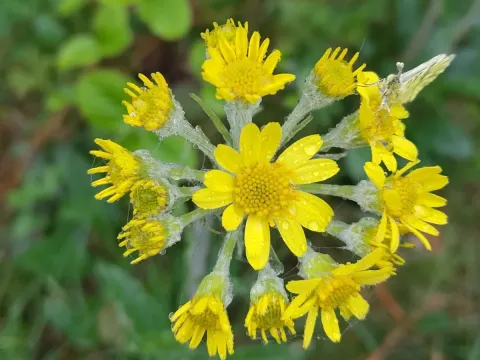
Tephroseris
Tephroseris
Sowing of Tephroseris seeds typically occurs in early spring, as soon as soil temperatures reach a consistent 10-12 degrees Celsius to ensure successful germination.
What the section contains
 Field fleawort
Tephroseris integrifolia
Field fleawort
Tephroseris integrifolia
 Flame Groundsel
Tephroseris flammea
Flame Groundsel
Tephroseris flammea
 Long-leaved leopardbane
Tephroseris longifolia
Long-leaved leopardbane
Tephroseris longifolia
 Marsh ragwort
Tephroseris crispa
Marsh ragwort
Tephroseris crispa
 Tephroseris balbisiana
Tephroseris balbisiana
Tephroseris balbisiana
 Tephroseris crassifolia
Tephroseris crassifolia
Tephroseris crassifolia
 Tephroseris helenitis
Tephroseris helenitis
Tephroseris helenitis
 Tephroseris kirilowii
Tephroseris kirilowii
Tephroseris kirilowii
 Tephroseris papposa
Tephroseris papposa
Tephroseris papposa
 Tephroseris pierotii
Tephroseris pierotii
Tephroseris pierotii
 Tephroseris takedana
Tephroseris takedana
Tephroseris takedana
Tephroseris
For more predictable results, sowing in controlled greenhouse environments during late winter allows seedlings to establish a strong root system before being transplanted.
The seeding depth should be minimal, as the seeds are quite small and require only a light covering of soil to protect them from wind while allowing light penetration.
Proper spacing, usually set at 25-30 centimeters, is vital for ensuring adequate air circulation around the maturing plants, which prevents moisture accumulation.
Once the seedlings emerge, it is essential to monitor them closely for thinning, ensuring that only the strongest specimens remain in the designated growing rows.
Tephroseris belongs to the Asteraceae family and thrives in environments that offer plenty of direct sunlight and well-drained, nutrient-rich soil conditions.
The plant demonstrates good adaptability to diverse climates, provided the soil structure allows for efficient drainage, which is crucial for overall plant health.
Agronomic practices should focus on maintaining a weed-free environment and performing regular surface cultivation to aerate the soil and reduce water evaporation.
Irrigation must be carefully managed to maintain moderate soil moisture levels, as Tephroseris is highly susceptible to root damage in waterlogged or heavy clay soils.
Applying balanced fertilizer during the early vegetative stage supports vigorous growth and ensures that the plant develops a sturdy structure for future development.
Fungal diseases are the primary threat to Tephroseris, particularly in regions with high humidity and poor airflow between the individual plants in the field.
Powdery mildew often manifests as a white, dusty layer on the foliage, requiring immediate intervention with appropriate fungicides to stop the spread of the infection.
Pests such as aphids and spider mites can cause significant stress to the plants during warm, dry spells, leading to stunted growth and yellowing of the leaves.
Root rot caused by stagnant water is a silent killer, often leading to rapid wilting and the total loss of the crop if drainage systems are insufficient.
Integrated pest management strategies, including the use of resistant varieties and timely crop rotation, are essential for sustainable and healthy plant cultivation.