
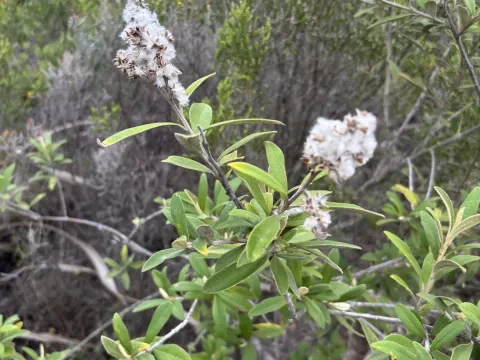
Tarchonanthus
Tarchonanthus
Tarchonanthus is a genus of evergreen shrubs and small trees belonging to the Asteraceae family. Native to the southern and eastern parts of Africa, these plants are well-adapted to diverse ecological niches, ranging from scrublands to wooded grasslands.
What the section contains

Tarchonanthus
The plant thrives in well-drained, sandy or loamy soils. It is highly valued in agriculture for its exceptional drought tolerance, allowing it to flourish in semi-arid environments where water availability is a limiting factor for other crops.
Climate requirements for optimal growth include abundant solar radiation. Tarchonanthus prefers warm to temperate conditions and can tolerate occasional light frosts, although extreme cold should be avoided to prevent damage to the terminal branches.
Agrotechnical management primarily involves pruning and thinning. Pruning is essential to control the canopy size and encourage the growth of dense, healthy foliage, which is the primary source of the valuable essential oils found in the leaves.
Economically, Tarchonanthus is utilized for its aromatic properties. The leaves contain secondary metabolites that are extracted for use in cosmetics, perfumes, and traditional medicine, establishing it as a promising botanical raw material.
Tarchonanthus exhibits strong natural resistance to many common agricultural pests. The presence of terpene-rich volatile oils in the leaves acts as a natural deterrent against herbivores and many insect species.
Waterlogging is the most significant threat to the health of these plants. Poorly drained soil leads to root asphyxiation and the subsequent development of root rot pathogens, which can rapidly compromise the integrity of the plant.
While generally hardy, the plants may occasionally be susceptible to fungal infections if kept in high-humidity conditions without proper airflow. Ensuring adequate spacing between shrubs is a vital preventive measure.
Foliar diseases, while rare, can appear in nursery settings if greenhouse ventilation is insufficient. Regular monitoring and removing any debris from around the base of the plant are recommended practices.
Due to its resilience, chemical control of pests is rarely necessary, making Tarchonanthus a suitable candidate for sustainable and low-input agricultural production systems.