
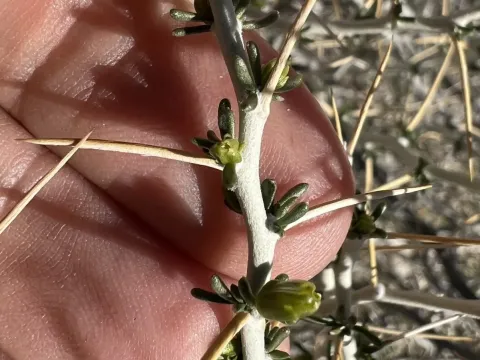
Tetradymia
Tetradymia
Tetradymia is a genus of perennial shrubs belonging to the Asteraceae family. These plants are native to the arid and semi-arid regions of western North America, where they have evolved to thrive under harsh environmental conditions that limit the growth of most other flora.
What the section contains


Tetradymia
The culture is characterized by its exceptional drought resistance, utilizing specialized biological adaptations to minimize water loss. Its ability to colonize rocky and sandy soils makes it a significant botanical subject for studying survival strategies in desert ecosystems.
The primary requirements for growth include full sun exposure and excellent soil drainage. The root system is highly developed, allowing the plant to tap into moisture stored deep within the soil profile. Poor drainage or waterlogged conditions are detrimental and can lead to rapid root decay.
Morphologically, many species of Tetradymia feature dense pubescence (hairs) on their foliage and stems. This physical barrier acts as an insulator, reflecting sunlight and reducing the rate of transpiration, which is essential for surviving the extreme heat of its natural habitat.
In terms of practical agricultural application, Tetradymia is primarily valued for its role in soil stabilization and erosion control projects. It is frequently included in restoration efforts for degraded rangelands, where its presence helps to maintain ecological integrity and prevent wind-driven soil loss.