
Marsh ragwort
Tephroseris crispa
Description
Growing requirements
Marsh ragwort, taxonomically classified as Tephroseris crispa, is a perennial herbaceous plant belonging to the Asteraceae family. It is a specialized species that thrives in naturally wet habitats and is recognized for its specific ecological niche.
Originating from the temperate regions of Europe, the plant is typically found in wetlands, marshy meadows, and along riverbanks. Its evolutionary history has perfectly adapted it to environments where high water saturation is a constant factor.
Cultivation requirements focus on nutrient-rich, moist soils. The ideal substrate is a well-structured loam or organic-rich soil that maintains moisture without becoming stagnant, which is critical for the plant's sustained development.
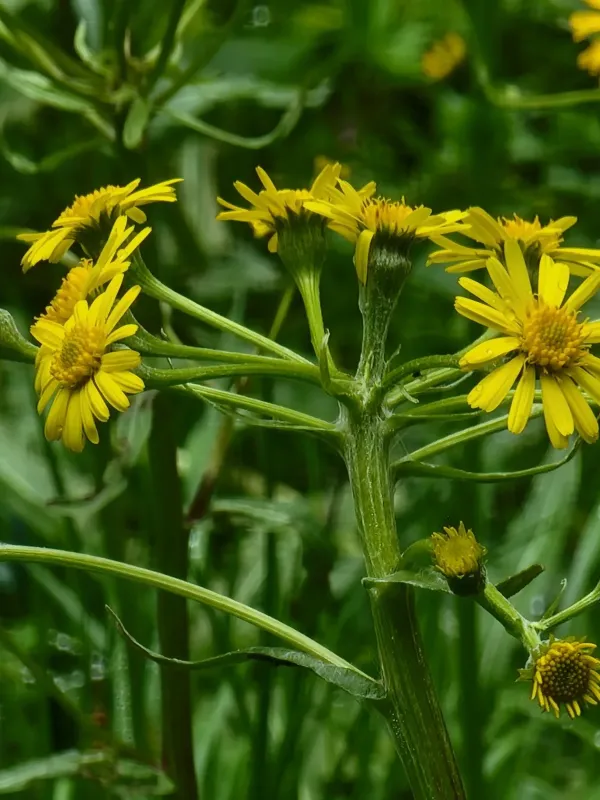
Botanically, Tephroseris crispa is characterized by its basal rosette of distinct, wavy-margined leaves and an upright stem that culminates in vibrant yellow composite flower heads. These features allow it to be easily identified in the field.
In terms of agricultural utility, the plant is valued for its hardiness in waterlogged fields where standard crop species fail. It serves as a vital component of biodiverse wetland vegetation, contributing to the overall biomass of such areas.
Main diseases and pests
The primary threats to Tephroseris crispa involve fungal pathogens, particularly those triggered by excessive humidity. Leaf spot diseases are common and can severely impact the quality of the foliage if left unmanaged.
Pest pressures are usually driven by aphids and specific beetles that target the soft tissues of the plant. Maintaining ecological balance is crucial, as large outbreaks can cause significant defoliation during the active growing season.
Root rot remains a major risk if the soil becomes excessively compacted, leading to poor oxygen exchange. Proper field drainage management, even for a moisture-loving species, is essential to maintain long-term crop health.
Competition from invasive weeds can displace marsh ragwort during the establishment phase. Early-season weeding and proper spacing are necessary to ensure the crop establishes a robust root system before the peak growth period.
Care must be taken when considering the plant's chemical composition, as it contains specific secondary metabolites. Any use of the plant for forage or other agricultural purposes must account for its chemical profile and safety limitations.