
Tephroseris balbisiana
Tephroseris balbisiana
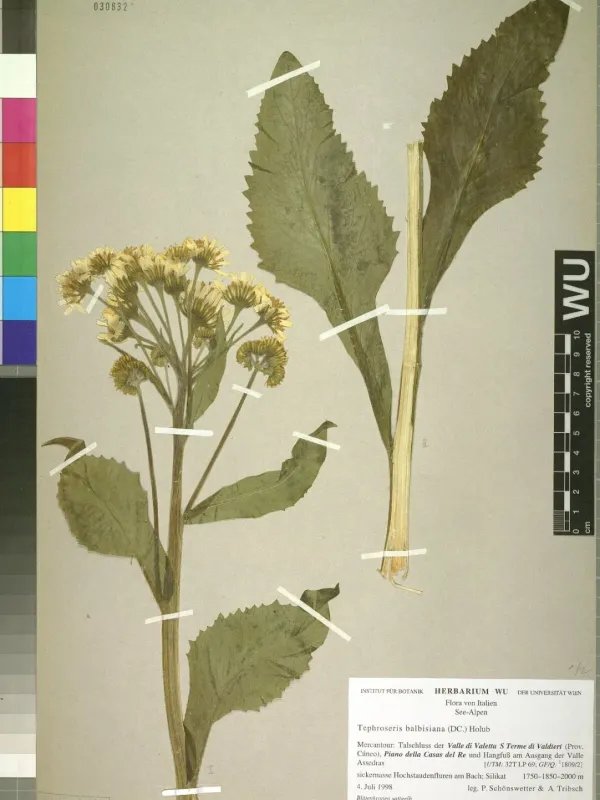
Description
Growing requirements
Tephroseris balbisiana is a perennial herbaceous plant belonging to the Asteraceae family. It is native to the alpine and subalpine regions of the Caucasus, where it has adapted to thin soils and cold temperatures.
The plant thrives in cool, moist climates and requires excellent exposure to sunlight. Its natural habitat is typically rocky slopes and meadows, which defines its preference for non-compacted substrates.
Regarding soil requirements, this species needs well-drained, nutrient-rich soils that do not retain excess water. Any saturation at the root level can lead to rapid physiological decline and rot.
Botanically, it features a distinct rosette of basal leaves and erect flowering stems topped with yellow inflorescences. The plant has evolved significant resilience to temperature fluctuations typical of high-altitude ecosystems.
Its хозяйственное usage is primarily focused on biodiversity preservation and niche ornamental applications, as the plant serves as a unique element in rocky garden landscapes or alpine restoration projects.
Main diseases and pests
The primary threats to Tephroseris balbisiana include fungal pathogens such as powdery mildew, which are especially prevalent in humid conditions with poor air circulation.
Insect pests, including aphids and leaf-eating beetles, often target the succulent parts of the plant during the early growth stages, potentially stunting its development.
Root rot, induced by waterlogging or pathogenic fungi, remains the most significant risk to the longevity of established plant colonies in cultivated settings.
Invasive weed encroachment poses a major challenge for the species, as it is relatively slow to establish compared to more aggressive meadow weeds.
To mitigate these risks, it is essential to ensure a clean growing environment, proper spacing between plants, and regular monitoring for early signs of infection or infestation.