
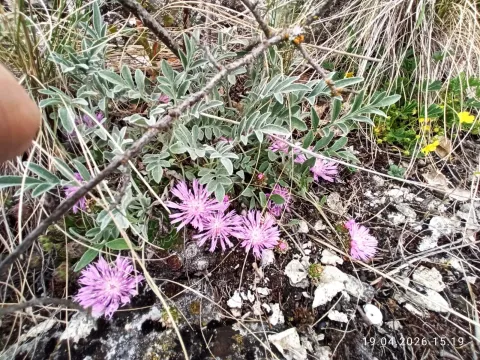
Psephellus
Psephellus
Psephellus is primarily propagated through seeds or division of mature rootstocks, depending on the specific species' growth pattern. Sowing in open ground is recommended during the spring, once the soil has warmed up sufficiently, or in late autumn.
What the section contains
 Psephellus caucasicus
Psephellus caucasicus
Psephellus caucasicus
 Psephellus dealbatus
Psephellus dealbatus
Psephellus dealbatus
 Psephellus declinatus
Psephellus declinatus
Psephellus declinatus
 Psephellus hypoleucus
Psephellus karduchorum
Psephellus karduchorum
Psephellus hypoleucus
Psephellus hypoleucus
Psephellus karduchorum
Psephellus karduchorum
 Psephellus leucophyllus
Psephellus leucophyllus
Psephellus leucophyllus
 Psephellus pulcherrimus
Psephellus pulcherrimus
Psephellus pulcherrimus
 Psephellus simplicicaulis
Psephellus simplicicaulis
Psephellus simplicicaulis
 Psephellus trinervius
Psephellus trinervius
Psephellus trinervius
Psephellus
For greenhouse or container production, start seeds in March or April using a well-draining substrate. Seeds should be sown on the surface and lightly pressed into the medium, as light exposure is often required for optimal germination.
Maintain a spacing of 30 to 50 centimeters between plants to ensure adequate air circulation. Proper spacing is critical to reduce humidity levels around the foliage, which is a major factor in preventing fungal infections.
Cold stratification for several weeks before sowing can significantly improve germination rates. This process mimics the natural seasonal cycle and encourages more uniform growth across the planting bed.
Once seedlings develop their first set of true leaves, they should be thinned or transplanted into individual pots. This practice promotes stronger root development and prepares the plants for final transplantation into the field.
As a member of the Asteraceae family, Psephellus thrives in full sun locations. Sufficient solar exposure is essential for maintaining plant vigor and ensuring the development of healthy, characteristic foliage.
The ideal soil for Psephellus is well-drained, sandy, or loamy soil with a neutral to slightly alkaline pH. The plants are highly sensitive to waterlogged conditions, which can quickly lead to root rot and mortality.
The culture displays excellent drought tolerance once established. Its hairy leaf structure is an evolutionary adaptation that minimizes water loss, allowing the plant to survive with minimal irrigation during dry spells.
Psephellus exhibits high cold hardiness, making it suitable for a wide range of climatic conditions. Most species can successfully overwinter in moderate climates without the need for additional protective covering.
Fertilization should be handled with caution; over-fertilization can result in lush but weak growth. Applying a balanced fertilizer once or twice during the early growth stage is typically sufficient to support healthy development.
Fungal issues, particularly powdery mildew and root rots, are the primary threats to Psephellus, especially when plants are grown in poorly ventilated or excessively humid conditions. Fungicide applications are effective if outbreaks occur.
Pests such as aphids and spider mites are known to infest the plant during the vegetative phase. These pests feed on sap, causing foliage damage and potentially reducing the plant's overall aesthetic and vigor.
Targeted insecticidal soaps or systemic insecticides can be used to control pest populations. It is crucial to monitor the underside of the leaves, where spider mites often congregate during hot and dry weather.
Integrated pest management, including the regular removal of weeds and debris, helps minimize the habitat for pests and pathogens. Keeping the area surrounding the plants clean is a basic but essential agricultural practice.
Regular inspection of the crop throughout the growing season is strongly recommended. Early detection of any anomaly allows for localized treatment, protecting the rest of the crop and ensuring a healthy harvest or display.