
Psathyrotes
Psathyrotes
Psathyrotes is a distinct genus within the Asteraceae family, well-known for its ability to thrive in the harsh environments of the North American deserts. These plants are typically low-growing, with a life cycle adapted to ephemeral rainfall events.
What the section contains

Psathyrotes
The primary environmental requirement for Psathyrotes is high light intensity. These xerophytes grow best in full, direct sun and require excellent drainage to avoid waterlogging, which is fatal to their root systems.
Soil composition should ideally be sandy, rocky, or gravelly. The plant is notably tolerant of saline or alkaline soils, which allows it to inhabit arid zones where competition from more common vegetation is severely limited.
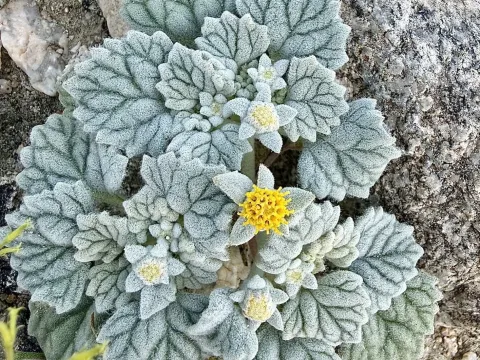
Adaptations to heat and drought include dense, woolly-like pubescence on the leaves. This physical barrier significantly reduces water loss through transpiration and protects the leaf tissues from extreme UV radiation.
Regarding moisture management, the plant has evolved to maximize water uptake during the brief periods when soil moisture is available. Its metabolism is specifically tuned to trigger rapid growth cycles upon arrival of rain, followed by dormancy.
Fungal pathogens are the most significant threat to Psathyrotes, especially in non-native or controlled environments where humidity levels are higher than those found in the high deserts of California or Nevada.
Root rot, primarily caused by excessive irrigation, is a major issue. Because the species lacks natural defenses against persistent dampness, once the fungal infection reaches the root crown, recovery is rarely possible.
Insect pests, including aphids and whiteflies, can become a nuisance during the peak growing season. They primarily damage the tender new foliage and interfere with the plant's photosynthetic efficiency.
Weed competition poses a severe challenge during the seedling stage. As Psathyrotes is a relatively slow grower compared to invasive grasses, it requires a clean, competition-free environment to establish its root system.
Environmental stress caused by temperature fluctuations outside the plant's normal range can also trigger metabolic decline, making it more susceptible to opportunistic pathogens that would otherwise be harmless.