
Psiadia
Psiadia
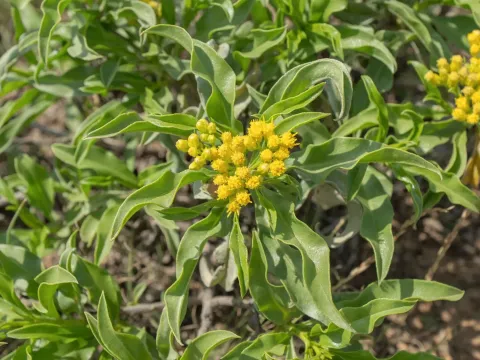
Psiadia is a genus of flowering plants belonging to the Asteraceae family. It consists of various species of shrubs and sub-shrubs that are predominantly native to tropical Africa and the islands of the southwestern Indian Ocean, notably Madagascar.
What the section contains


Psiadia
The botanical structure of Psiadia is adapted to diverse habitats, ranging from coastal areas to mountainous regions. These plants typically exhibit woody stems and clustered flower heads, which are characteristic of many members of the daisy family.
Agricultural success with Psiadia requires well-drained, porous soil types. The plants are sensitive to waterlogged conditions, which frequently lead to root system decay, making proper site selection or substrate preparation essential for commercial production.
The crop thrives in warm, sunny environments with high levels of light intensity. It is not cold-hardy, requiring temperatures that stay well above freezing throughout the growing season to ensure optimal physiological development and oil production.
Industrially, Psiadia is primarily valued for its phytochemical constituents, including essential oils and flavonoids. These compounds have been utilized in traditional medicine and are subjects of ongoing research for potential applications in modern nutraceuticals.
The most significant pathological threats to Psiadia include fungal pathogens such as Rhizoctonia and Fusarium. These fungi proliferate primarily when soil moisture management is inadequate, emphasizing the importance of precise irrigation.
Pest management for this crop focuses on mitigating outbreaks of aphids, whiteflies, and spider mites. Effective control strategies often involve a combination of biological agents and localized environmental management to reduce pest nesting opportunities.