
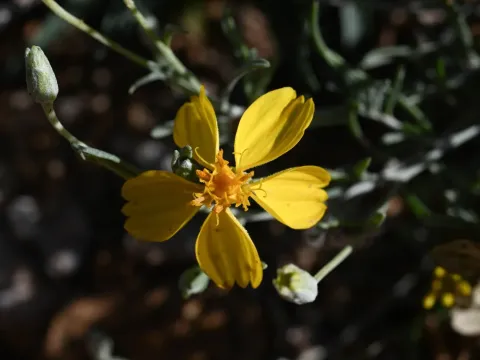
Psilostrophe
Psilostrophe
Sowing Psilostrophe is primarily conducted in the spring once the threat of frost has passed and the soil temperature consistently reaches above +15°C.
What the section contains

Psilostrophe
The seeds of this plant are quite small, so it is not recommended to bury them deep in the soil; a light dusting of sand or a fine substrate is sufficient.
To accelerate germination, agronomists recommend a stratification method, keeping the seeds in a cool environment for 3–4 weeks before planting in the soil.
The optimal planting pattern requires a spacing of approximately 40–50 cm between rows, providing adequate space for the root system to develop fully.
In regions with long warm seasons, transplanting from greenhouse-grown seedlings is common, allowing for flowering specimens within the first year of growth.
Psilostrophe belongs to the Asteraceae family and is a drought-tolerant plant adapted to the semi-desert and arid regions of the southwestern United States and Mexico.
For successful growth, the crop requires a sunny location with direct exposure throughout the entire day, as shaded conditions cause the plant to become leggy and lose its aesthetic appeal.
Soils should be light, sandy, or loamy with excellent drainage, as moisture stagnation in the root zone is detrimental to this species.
The plant is highly specific regarding soil pH, showing the best development rates in neutral to slightly alkaline soils with low organic matter content.
A crucial requirement is maintaining moderate watering; during the active growth phase, watering should be regular but infrequent, while the soil must remain mostly dry during dormancy.
The primary threat to Psilostrophe is fungal root disease, which often develops as a result of excessive moisture and poor soil aeration.
Powdery mildew may infect the leaves during periods of high humidity, requiring preventative treatments with systemic fungicides.
Among pests, spider mites are frequently observed on Psilostrophe crops, as they thrive in hot and dry weather while draining nutrients from the shoots.
Aphids can also cause significant damage to young inflorescences, stunting plant growth and potentially spreading viral infections through their feeding process.
Root-knot nematodes pose a specific threat in heavy soils, making crop rotation and strict sanitation of planting materials essential preventive measures.