
Haworthiopsis attenuata
Haworthiopsis attenuata
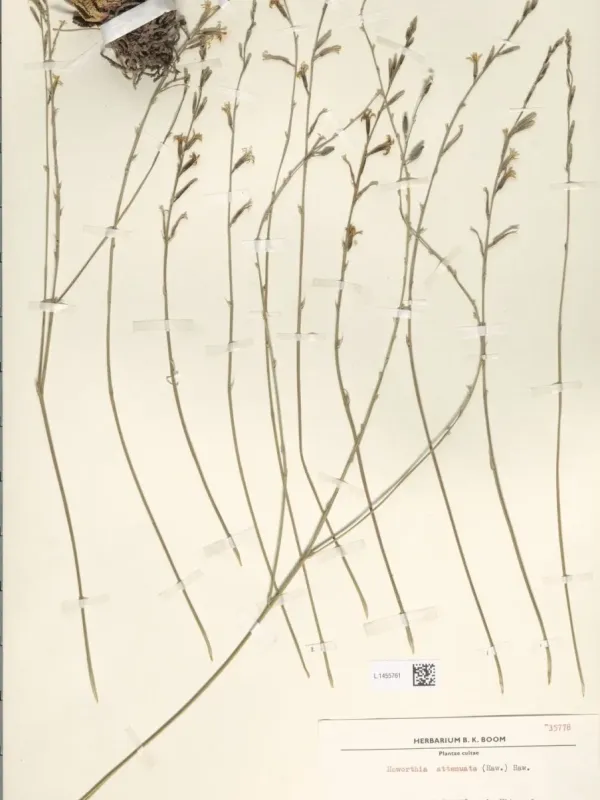
Description
Growing requirements
Haworthiopsis attenuata belongs to the Asphodelaceae family. This succulent perennial originates from the arid regions of South Africa, where it has evolved to store water in its thick, fleshy, dark green leaves adorned with white tubercles.
The plant thrives in bright, indirect light. While it can withstand some morning sun, intense midday light is detrimental and can scorch the foliage. Indoors, a south or east-facing window with filtered light provides the ideal environment for healthy growth.
Soil requirements are strict regarding drainage. A standard potting mix for succulents must be supplemented with grit, perlite, or pumice to ensure that excess water drains quickly, preventing prolonged saturation of the root system.
Watering should be practiced only when the soil has dried out completely. During the dormant winter season, water intake should be significantly reduced to mimic the natural cycle of the plant in its native habitat.
Propagation is efficiently achieved through offsets or "pups" that grow at the base of the mother plant. This method allows for rapid multiplication and is the primary way this species is cultivated and distributed.
Main diseases and pests
Root rot is the most significant threat to this species, usually caused by overwatering or poor drainage. Once roots are compromised, the plant struggle to recover, often leading to the death of the entire rosette.
Mealybugs are the most common pests, hiding deep between the leaves. They appear as small, cotton-like masses and can stunt the plant's growth by draining its sap and attracting secondary fungal infections.
Spider mites can occasionally infest the plant, particularly in very hot and dry conditions. Regular cleaning of the leaves and maintaining appropriate ambient conditions usually helps to prevent these outbreaks.
Etiolation is a condition where the plant grows weak, elongated, and pale due to insufficient light. While not a disease, it ruins the plant's aesthetic and structural integrity, requiring immediate relocation to a brighter spot.
Fungal leaf spot diseases can develop if the environment lacks sufficient air circulation. Ensuring good ventilation around the plant is essential to prevent moisture accumulation on the leaf surfaces.