
Haworthiopsis coarctata
Haworthiopsis coarctata
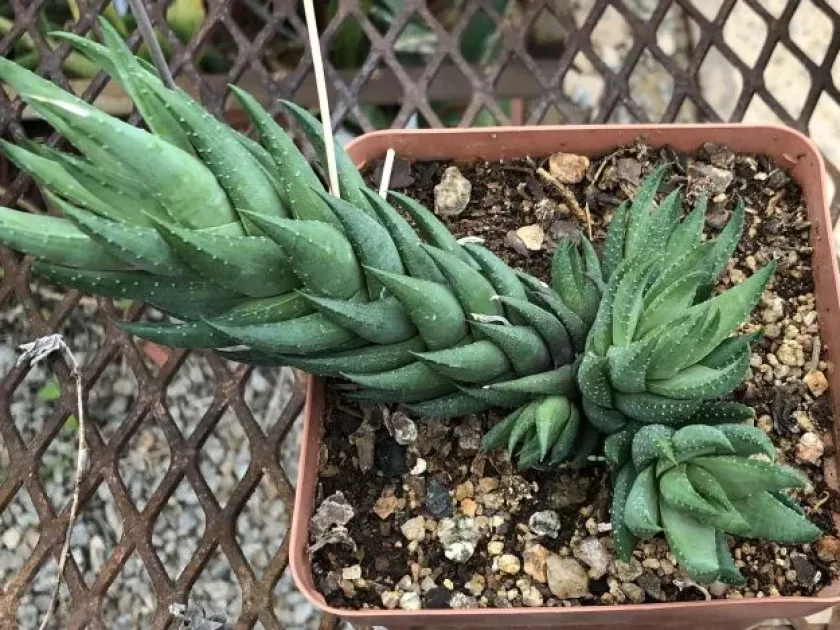
Description
Growing requirements
Haworthiopsis coarctata is a succulent species within the Asphodelaceae family. Native to the Eastern Cape province of South Africa, it is widely appreciated for its tightly packed, column-like succulent rosettes.
Regarding climatic needs, this plant thrives in moderate conditions. It requires bright, indirect sunlight to maintain its vibrant leaf coloration and structural integrity, as intense direct sun can scorch the foliage.
The soil must provide excellent drainage. A specialized succulent mix consisting of volcanic rock, pumice, or sand mixed with organic loam ensures the root system does not stay wet for extended periods.
Watering frequency should be adjusted seasonally. In the growing season, wait until the soil is completely dry before watering deeply. In the dormant winter season, water should be significantly reduced.
Temperature management is crucial; the plant prefers warm daytime temperatures and benefits from a slight cooling effect at night. It is not frost-tolerant and must be protected from temperatures below 10°C.
Main diseases and pests
The most common pests affecting this species are mealybugs. These insects often hide in the crevices between leaves, and manual removal combined with systemic pesticide application is recommended.
Root rot is the primary physiological threat to Haworthiopsis coarctata. It is almost exclusively caused by overwatering or poor drainage, leading to the rapid decay of the root collar.
Scale insects can also infest the leaves, feeding on the sap. Regular inspection of the plant's foliage is a key management strategy to detect these pests early and prevent widespread infestation.
Fungal infections can occur in high-humidity environments with stagnant air. Maintaining good airflow is an essential part of the plant's health program to ensure the foliage dries out quickly after watering.
In cases of severe soil-borne disease or infestation, repotting into sterilized substrate and trimming decayed root portions is the most effective corrective agronomic intervention.