

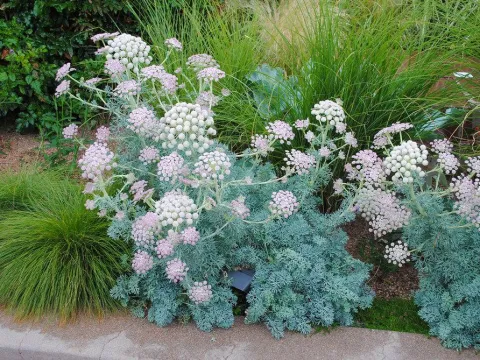
Reference · Crops
Seseli
Seseli
Sowing Seseli is best performed in late autumn or early spring, as soon as the soil is workable. Seeds of this plant are known for their slow germination, which makes achieving optimal seed-to-soil contact essential for a successful start.
21
items
What the section contains
 Annual seseli
Seseli annuum
Annual seseli
Seseli annuum
 Austrian Seseli
Seseli austriacum
Austrian Seseli
Seseli austriacum
 Cantabrian seseli
Seseli cantabricum
Cantabrian seseli
Seseli cantabricum
 Koch's Seseli
Seseli kochii
Koch's Seseli
Seseli kochii
 Moon carrot
Seseli libanotis
Moon carrot
Seseli libanotis
 Mountain Seseli
Seseli montanum
Mountain Seseli
Seseli montanum
 Seseli campestre
Seseli campestre
Seseli campestre
 Seseli dichotomum
Seseli dichotomum
Seseli dichotomum
 Seseli diffusum
Seseli djianeae
Seseli djianeae
Seseli galloprovincialis
Seseli galloprovincialis
Seseli diffusum
Seseli diffusum
Seseli djianeae
Seseli djianeae
Seseli galloprovincialis
Seseli galloprovincialis
 Seseli gummiferum
Seseli gummiferum
Seseli gummiferum
 Seseli hippomarathrum
Seseli indica
Seseli indica
Seseli hippomarathrum
Seseli hippomarathrum
Seseli indica
Seseli indica
 Seseli lehmannii
Seseli lehmannii
Seseli lehmannii
 Seseli longifolium
Seseli longifolium
Seseli longifolium
 Seseli osseum
Seseli pallasii
Seseli pallasii
Seseli peucedanoides
Seseli peucedanoides
Seseli osseum
Seseli osseum
Seseli pallasii
Seseli pallasii
Seseli peucedanoides
Seseli peucedanoides
 Seseli rigidum
Seseli rigidum
Seseli rigidum
 Seseli tortuosum
Seseli tortuosum
Seseli tortuosum
Marketplace
Products in this section · 1
Seseli
The seeds should be sown at a depth of no more than 1-2 centimeters to ensure they can easily emerge. Autumn sowing facilitates natural stratification, which promotes more uniform and vigorous germination when warmer spring weather arrives.
A typical seeding rate ranges from 6 to 10 kg per hectare, depending on seed quality and planting method. Using a wide-row spacing of 45-60 centimeters is recommended in commercial production to facilitate easier mechanical weeding and crop maintenance.
Because seedlings develop slowly, keeping the fields free of competing weeds during the initial stages of growth is crucial. Preparing a fine, crumbly seedbed ensures that the delicate emerging plants are not hindered by soil crusting.
For enhanced field performance, professionals often recommend pre-soaking seeds in growth stimulants. In arid climates, a light irrigation immediately after sowing is necessary to prevent the topsoil from drying out before the seeds sprout.
Seseli is a highly adaptable crop, yet it reaches its peak productivity on light, well-aerated sandy or loamy soils. It is particularly sensitive to waterlogging; therefore, well-drained sites are non-negotiable to prevent root rot.
The plant thrives in soil with a neutral to slightly alkaline pH. On overly acidic soils, the crop’s development is noticeably stunted, so liming should be performed at least one year before planting to adjust the soil chemistry.
Seseli is a light-loving plant that requires open, sunny areas to reach its full potential. Adequate sun exposure is essential for the biosynthesis of essential oils, which are concentrated in the leaves and flowering parts of the plant.
The crop performs best in temperate climates, demonstrating excellent winter hardiness. It is well-suited for regions with distinct seasons, as it can withstand significant frost without compromising its perennial health.
Soil nutrient management, particularly with phosphorus and potassium, is vital for building strong roots. Balanced fertilization during the active growing season increases the plant's overall resilience against environmental stress factors.
Yield metrics for Seseli depend heavily on the growth phase at the time of harvest and the specific agricultural practices employed. On average, commercial producers can expect between 15 and 30 quintals per hectare of fresh biomass.
Biological productivity is directly linked to moisture availability during the budding stage. While the plant is drought-tolerant, supplemental irrigation during dry periods can boost biomass yield by up to 30% compared to rain-fed crops.
The highest concentration of bioactive compounds and essential oils is reached during full bloom. Harvesting at exactly this time ensures that the raw material meets pharmaceutical or cosmetic quality standards.
A healthy soil microbiome supports the uptake of vital nutrients, leading to higher yields over multiple years. Rotating the crop periodically is recommended to prevent soil exhaustion and maintain high production standards.
Yield estimates should be made by monitoring field health in early summer. The development of flower heads during this period is a key indicator of the final harvest weight, including both the biomass and potential seed yield.
Fungal diseases, particularly powdery mildew, are the most significant threat to Seseli when grown in high-humidity conditions. These pathogens attack the foliage, reducing the plant's photosynthetic capacity and oil production.
Root rot, which results from excessive soil moisture and poor drainage, can cause rapid crop loss. Prevention primarily relies on good soil management and the avoidance of compaction in the root zone.
Among pests, the parsley worm and various aphid species are the most problematic, as they target the delicate flower heads. Significant damage to these reproductive structures results in both seed loss and quality degradation.
An integrated pest management strategy, utilizing biological controls and timely application of approved pesticides, is the most effective way to protect the crop. Regular field scouting is necessary to identify outbreaks before they spread.
Weed competition is a severe challenge for Seseli in its first year of establishment. Persistent weeds like thistles or couch grass can rapidly outcompete the young plants for resources, necessitating diligent mechanical cultivation.
Harvesting must be timed precisely, especially when the crop is intended for essential oil extraction, as these compounds are highly volatile. Clipping the greenery during peak flowering is mandatory for optimal oil quality.
Seed harvest is conducted when the plants reach wax maturity to prevent pre-harvest shedding. Implementing a two-stage harvest—cutting and windrowing—allows the seeds to finish maturing safely without excessive losses.
Mechanical harvesting requires precise equipment settings to ensure that the small seeds are not crushed or damaged during threshing. Proper machine calibration is essential for maintaining high seed viability.
Post-harvest, the material must be dried immediately in well-ventilated areas or specialized ovens at temperatures not exceeding 45 degrees Celsius. Overheating results in the loss of precious aromatic oils.
The final product should be stored in airtight containers in cool, dark, and dry warehouses. Maintaining these conditions ensures the physical and chemical integrity of the harvested material until it reaches the processor.