
Austrian Seseli
Seseli austriacum
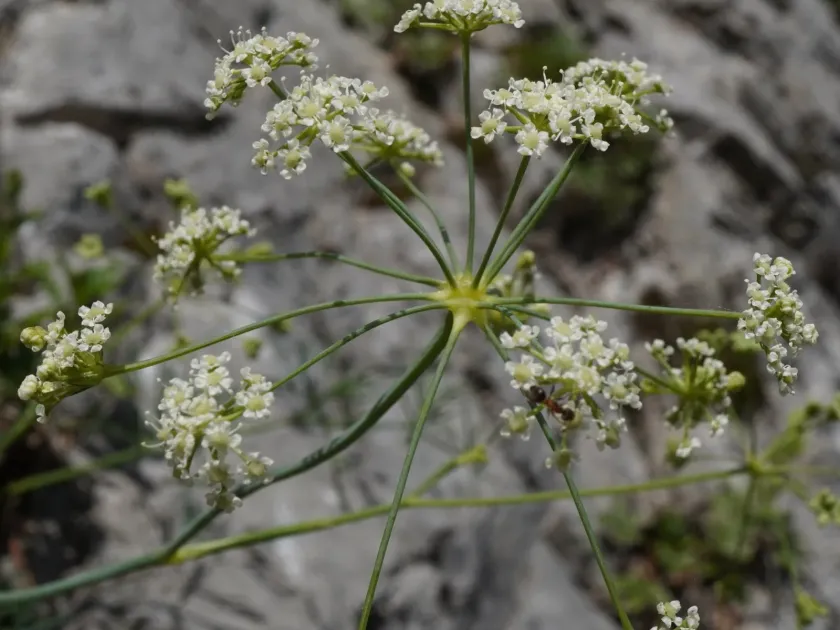
Description
Sowing dates
Austrian Seseli is a perennial herb belonging to the Apiaceae family. It is recognized for its adaptive nature in temperate European landscapes and dry grassland habitats.
Propagation is primarily achieved through seeds, which require a cold stratification period to break dormancy and ensure high germination rates.
Sowing should be done in late autumn or early spring, placing seeds shallowly into well-drained, prepared soil beds with adequate moisture.
Seedlings develop a slow initial growth rate, focusing on establishing a deep taproot before expanding their above-ground foliage significantly.
Spacing between plants should be carefully managed to prevent overcrowding, as mature specimens can develop a wide, spreading habit in their second year.
Growing requirements
This species thrives in sunny, open environments and requires full sun exposure to maximize the synthesis of its aromatic essential oils.
Well-drained soil is a critical requirement for this crop; it does not tolerate waterlogging, which often leads to root rot in heavier soil types.
Austrian Seseli prefers calcareous and rocky soils, reflecting its evolutionary origin in limestone-rich, dry steppe-like ecosystems.
The plant demonstrates excellent winter hardiness, surviving cold cycles common in its natural range without the need for additional physical protection.
Once established, the crop is highly drought-tolerant, making it suitable for sustainable agricultural systems in regions with erratic rainfall patterns.
Main diseases and pests
Fungal pathogens such as powdery mildew can be problematic during periods of high humidity or poor air circulation within the plant canopy.
Aphids represent the most common pest threat, frequently colonizing the flower umbels and tender young tips of the stems during spring.
Soil-dwelling larvae, including wireworms, can damage the developing root systems, potentially leading to stunted growth or plant mortality.
Effective management strategies include crop rotation and ensuring sufficient inter-row spacing to maintain a dry microclimate around the plants.
Biological controls are generally preferred to manage aphid populations, preserving the quality of the harvested botanical material.
Harvesting
Harvest timing is dictated by the intended use, focusing on either root harvesting for medicinal purposes or seed collection for oil extraction.
Roots should be harvested at the end of the vegetative cycle, typically in autumn, when the plant has concentrated nutrients in the underground storage organ.
For seed harvesting, timing is essential; stalks must be cut just before the seeds fully shatter to prevent significant yield losses in the field.
Proper drying protocols, including low-heat and good ventilation, are necessary to ensure the essential oils are preserved and not degraded during processing.
Storage should occur in airtight containers away from direct light to maintain the potency and aromatic profile of the harvested yield.