
Seseli osseum
Seseli osseum
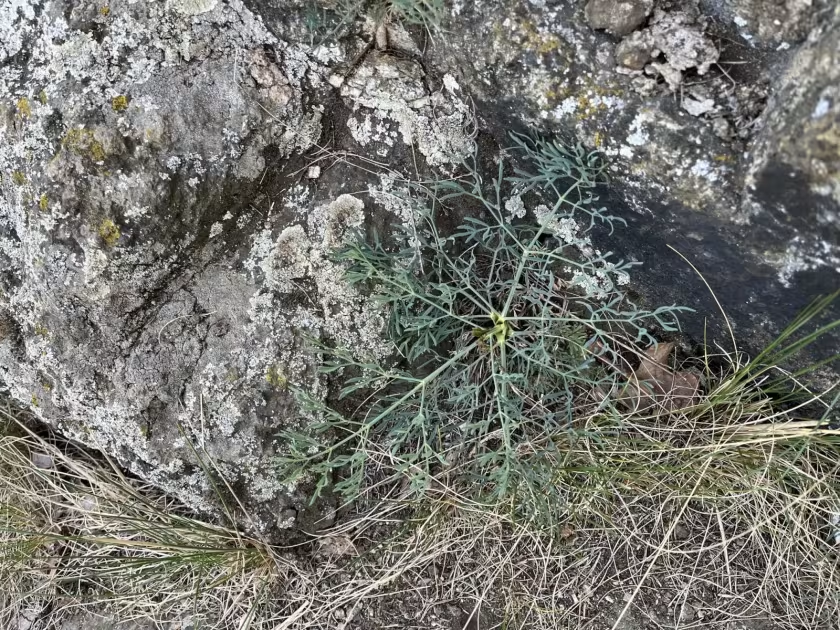
Description
Sowing dates
Sowing Seseli osseum seeds is preferably carried out in late autumn, as the seeds require natural stratification to germinate uniformly in the spring. Autumn planting in open ground allows the plants to establish themselves before the intense summer heat.
For spring sowing, preliminary cold stratification at 0–5 degrees Celsius for several weeks is necessary. This mimics natural environmental conditions and increases the germination energy, which is inherently low in this species.
The sowing depth should be minimal, not exceeding 0.5–1 cm, as the seeds are light-sensitive and lose viability if planted too deeply. It is recommended to slightly firm the soil surface after sowing to ensure good contact.
In field cultivation, spacing between rows should be between 45 and 60 cm to provide sufficient space for plant development. Plant density is managed by thinning seedlings once the first two true leaves appear.
The crop grows slowly during its first year, making rigorous weed control essential in the early stages. The use of mulch can significantly facilitate the care and maintenance of young plants during this period.
Growing requirements
Seseli osseum, belonging to the Apiaceae family, is a typical xerophytic plant that thrives in open, sunny locations. The plant is extremely sensitive to excessive soil moisture and waterlogging.
Successful cultivation requires well-drained, light-textured soils. Stony or calcareous soils with a neutral to slightly alkaline pH are considered ideal for this species.
This crop exhibits high drought and frost resistance, making it suitable for regions with continental climates. It does not tolerate stagnant water, which frequently leads to the development of root rots.
In its natural habitat, the plant is adapted to nutrient-poor soils. Under cultivation, excessive nitrogen fertilization is discouraged, as it tends to reduce the concentration of essential oils within the tissues.
The best predecessors for this crop are row crops that do not leave behind high weed pressure. While not demanding frequent irrigation, regular watering during the first year of life is critical during prolonged dry spells.
Main diseases and pests
The main threat to Seseli osseum comes from fungal infections that thrive in high humidity conditions, both in the air and the soil. Powdery mildew and various leaf spot diseases are the most prevalent issues.
Among pests, the umbellifer moth and aphids are commonly encountered, as they damage inflorescences and young shoots. Damage to generative organs can substantially reduce seed yield.
The root system may be attacked by wireworms and white grubs when planted on land recently reclaimed from grassland. Preventive soil treatment before sowing significantly reduces these risks.
To protect the crops, biological fungicides and insecticides should be prioritized, as the plant can accumulate synthetic chemical residues. Regular inspection of the fields allows for early detection and control of pest outbreaks.
Disease prevention relies on adhering to agronomic standards, such as ensuring proper aeration of the stands and monitoring soil drainage. It is crucial to avoid dense planting, which creates a favorable microclimate for pathogens.