
Seseli longifolium
Seseli longifolium
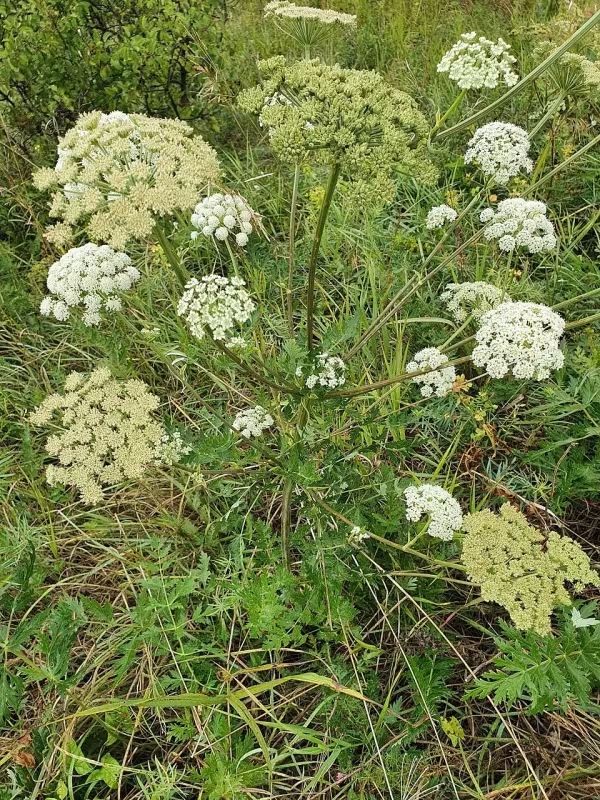
Description
Sowing dates
The sowing of Seseli longifolium is ideally carried out during late autumn or early spring, as the seeds require a period of stratification to achieve uniform germination.
Seeds should be sown at a depth of 1 to 2 centimeters. Ensuring good contact between the seeds and the soil is crucial for stimulating the emergence of seedlings in the field.
Row spacing should be maintained between 45 and 60 centimeters to facilitate mechanical weed control and proper airflow throughout the development of the plants.
Spring sowing requires the soil to warm up to at least 5–8 degrees Celsius. Seedlings typically appear within 2–3 weeks, provided there is adequate and consistent soil moisture.
Following a proper crop rotation plan is essential; it is recommended to avoid planting this crop after other members of the Apiaceae family to prevent the buildup of specific soil-borne pathogens.
Growing requirements
Seseli longifolium is a perennial herbaceous plant belonging to the Apiaceae family, naturally adapted to rocky slopes and steppe environments.
The crop prefers light, well-drained loamy or sandy soils. Soil aeration is critical, as the root system is sensitive to waterlogging and compaction, which can lead to root decay.
The plant is light-demanding, requiring open and sunny locations. It exhibits high drought tolerance, making it an excellent candidate for regions with limited irrigation resources.
It thrives in soils with a neutral to slightly alkaline pH. Improving soil structure prior to planting significantly enhances the plant's growth vigor and overall health.
Tolerance to temperature extremes is high, as the plant is naturally adapted to survive both cold winters and hot, dry summers characteristic of its native habitat.
Yield
The yield of Seseli longifolium depends on the plant age, as it is a perennial that reaches its full productive potential in its second and third years of life.
The average harvest of dry biomass typically ranges from 15 to 20 centners per hectare, depending on soil quality and the timing of agronomic interventions.
Seed yield varies depending on the maturity of the umbels; differential harvesting techniques are recommended to minimize losses caused by seed shattering during ripening.
Applying mineral fertilizers, particularly those rich in phosphorus and potassium, helps strengthen plant tissue and improves the overall quality of the harvested crop.
Essential oil content is a primary quality indicator for this plant; therefore, harvest timing must align with the peak flowering period to ensure high product value.
Main diseases and pests
Powdery mildew is the most common disease affecting this crop, particularly in environments with high humidity and poor air circulation between rows.
Root rot may occur due to persistent overwatering or high groundwater levels, necessitating the maintenance of adequate drainage systems in the field.
The most significant pests include the umbellifer moth and aphids, which can damage flowers and foliage, thus reducing the marketability of the medicinal raw material.
Implementing integrated pest management, including biological control methods, is recommended to ensure the production of environmentally friendly and high-quality biomass.
Controlling weeds during the early vegetative stage is essential, as the young plants grow slowly and are easily outcompeted by more aggressive weeds.
Harvesting
Biomass harvesting is conducted during the full flowering stage when the concentration of essential oils and bioactive compounds is at its highest level.
Mowing should take place on sunny days after the dew has evaporated, using specialized machinery to ensure a clean cut at the appropriate height for the plant.
Post-harvest drying must be performed quickly in shaded, well-ventilated areas to prevent the degradation of essential oils caused by exposure to direct sunlight.
Seed collection is carried out using harvesters with precise airflow settings to separate seeds from impurities without damaging the fragile material.
Stored raw material should be kept in dry, dark, and cool conditions within airtight containers to ensure the longevity of its beneficial chemical properties.