
Annual seseli
Seseli annuum
Description
Sowing dates
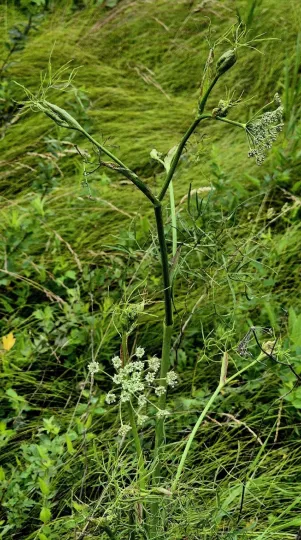
Annual seseli (Seseli annuum) is an herbaceous plant belonging to the Apiaceae family. As an annual crop, it completes its life cycle within a single growing season, making it a viable candidate for specific crop rotation patterns.
The optimal sowing time is early spring, once soil temperatures consistently reach 8-10 degrees Celsius. Providing consistent moisture during the germination stage is critical for successful stand establishment.
Standard agronomic practice involves row planting with spacing of 45-60 centimeters. Seeds should be sown at a shallow depth of 1-2 centimeters to ensure effective emergence and uniform growth.
Originating from the steppe and forest-steppe regions of Europe and Asia, the plant is well-adapted to environments with moderate moisture and significant light exposure.
Pre-sowing treatment, such as stratification or soaking, may be required to overcome natural seed dormancy, ensuring higher germination rates in field conditions.
Growing requirements
This crop thrives in light, well-drained loamy or sandy soils. It prefers a neutral to slightly alkaline pH, which facilitates the uptake of essential micronutrients for optimal development.
Annual seseli is highly sun-loving. It requires open fields with no shading from adjacent vegetation to ensure the high-quality accumulation of essential oils in its tissues.
Proper field management must avoid waterlogged areas, as the roots are sensitive to hypoxia. Good soil aeration is essential for the healthy vegetative growth of the plant.
While the plant shows some tolerance to temporary moisture deficits, periodic irrigation during critical vegetative stages significantly improves final yield and overall plant biomass.
Routine weeding and inter-row cultivation are necessary to minimize resource competition and prevent soil crusting, which can impede the development of young plants.
Main diseases and pests
Fungal diseases, particularly powdery mildew and various leaf spot pathogens, represent the most significant threat to annual seseli, especially during periods of high humidity.
Soil-dwelling insects and larvae can damage the root systems, leading to stunted growth. Effective monitoring and the use of integrated pest management are recommended.
Implementing a balanced crop rotation is the primary strategy to avoid the buildup of soil-borne pathogens. It is advised not to plant Seseli annuum in the same field more than once every four years.
Biological seed treatments serve as an effective preventative measure against early-stage infections, promoting vigorous growth during the most vulnerable period of development.
Maintaining clean field borders and eliminating wild Apiaceae species helps reduce the risk of viral and fungal transmission to the crop.
Harvesting
Harvesting is performed during the stage of full seed maturity. Indicators include a brownish discoloration of the umbels and the easy detachment of seeds from the plant.
Because the seeds tend to shatter easily, the harvest process must be timed precisely. Mechanical harvesting is common, often utilizing specific settings to minimize seed loss.
Post-harvest handling requires immediate drying in well-ventilated conditions or controlled-temperature drying facilities, ensuring that the temperature does not exceed 40 degrees Celsius.
Cleaning and refining the harvest involves removing debris and impurities, followed by conditioning the seeds to a moisture level suitable for safe long-term storage.
Economically, annual seseli is primarily utilized for its essential oils and secondary metabolites, which serve as valuable components in the pharmaceutical and food additive industries.