
Seseli diffusum
Seseli diffusum
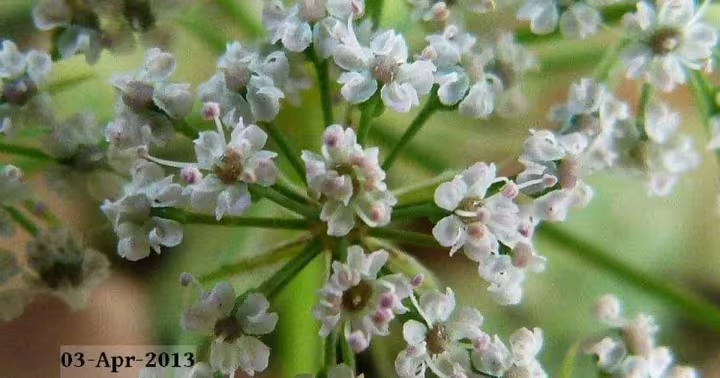
Description
Growing requirements
Seseli diffusum is a perennial herbaceous plant belonging to the Apiaceae (celery) family. It naturally inhabits arid steppe zones and rocky outcrops, showcasing remarkable evolutionary adaptation to harsh, exposed environments.
The plant features a deep taproot system, which allows it to remain productive during periods of significant drought. It thrives in well-drained, porous soils, including sandy or stony substrates that would be unsuitable for more demanding agricultural crops.
Climatic requirements for Seseli diffusum involve plenty of sunlight and a continental climate with moderate annual precipitation. It is highly resilient to cold winters and summer heatwaves, making it an excellent candidate for sustainable farming in semi-arid regions.
Botanically, the species is characterized by its dissected foliage and compound umbel inflorescences typical of its family. The entire plant is rich in volatile compounds, which represent a significant interest for the essential oil and pharmaceutical industries.
Agricultural utility of this crop extends beyond medicine to beekeeping, as its nectar-rich flowers provide a high-quality forage source for honeybees. Proper management involves minimizing soil disturbance and avoiding over-fertilization, which can negatively affect oil concentration.
Main diseases and pests
The most common pests affecting Seseli diffusum are aphids, which tend to congregate on the succulent stems and developing buds during the spring growth phase.
Root rot and crown diseases are significant risks if the plant is grown in compacted, poorly drained soils where moisture accumulates around the base of the plant.
The umbellifer moth is a primary biological threat, as its larvae feed on the developing flower heads, potentially destroying the seed crop and reducing floral biomass.
Effective management strategies include crop rotation and ensuring adequate plant spacing to prevent the micro-climate from becoming too humid, which discourages both pests and fungi.
Should infestation occur, targeted application of organic insecticidal soaps or biological controls is recommended to maintain the purity of the raw plant material for further processing.