
Koch's Seseli
Seseli kochii
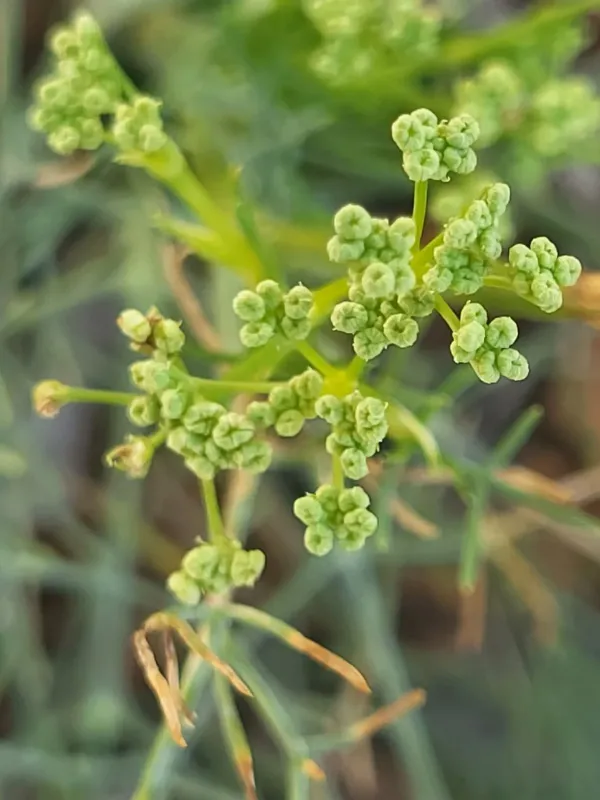
Description
Sowing dates
Sowing of Koch's Seseli is typically performed in late autumn or early spring when soil temperatures reach 5–8 degrees Celsius. The seeds possess a prolonged dormancy period, which often necessitates stratification for 1–2 months to improve germination rates.
Sowing depth during industrial cultivation should not exceed 1.5–2 centimeters due to the small size of the seeds. It is recommended to use row seeding with a spacing of 45 to 60 centimeters between rows to ensure proper maintenance of the emerging crop.
The seeding rate is calculated based on the quality of the seed material and the target plant density per hectare. Generally, 6 to 8 kilograms of high-viability seeds are required per hectare.
During the initial weeks following germination, the crop develops very slowly, making it critical to keep the fields free from weeds. Mechanical cultivation of inter-row spaces is performed as needed to prevent soil crusting.
The optimal plant density at the time of harvest is 8–10 plants per linear meter of the row. This spacing allows the plant to develop a robust root system and a well-developed aerial part.
Growing requirements
Koch's Seseli is a light-loving plant belonging to the Apiaceae family, which is why open, sunny fields without shading are selected for its cultivation. The crop reacts extremely negatively to waterlogging, making heavy clay soils unsuitable for production.
The most suitable soils for cultivation are light sandy loams or loamy chernozems with a high humus content. The optimal soil pH level ranges between 6.5 and 7.5.
The plant exhibits high drought resistance, allowing it to be successfully cultivated in steppe and forest-steppe zones. However, for maximum biomass production, moderate rainfall during the active vegetative growth phase is required.
The crop is moderately demanding regarding temperature; mature plants can tolerate significant temperature fluctuations. The primary limiting factor is soil moisture during the germination phase and the formation of the first true leaves.
Agronomic practices also include the application of phosphorus-potassium fertilizers, which promote the development of a powerful taproot. Nitrogen fertilizers are applied with caution to avoid excessive vegetative growth at the expense of essential oil accumulation.
Main diseases and pests
The main pests for Koch's Seseli are typical insects that affect Apiaceae crops. Aphids and various species of plant bugs, which feed on the sap of young flower stalks, can cause the most significant damage.
Among fungal diseases, powdery mildew poses the greatest threat, especially during sharp fluctuations between day and night temperatures. Affected leaves become covered with a characteristic white coating, which reduces the quality of the marketable raw material.
Root rot can become a problem if agricultural practices are violated or if the soil is waterlogged. It is recommended to strictly observe crop rotation and not to return the crop to the same field for at least 4–5 years.
In pest control, preference is given to biological methods and the use of systemic insecticides in strict accordance with safety regulations. Preventive seed treatment with fungicides before sowing significantly reduces the risk of pathogen development.
Crop monitoring should be carried out weekly, especially during the flowering phase, when the plant is most attractive to insects. Timely removal of weed reservoirs of infection is a mandatory agronomic practice.
Harvesting
The harvest of Koch's Seseli is conducted during the mass flowering period when the concentration of essential oils in the aerial part reaches its peak. At this specific moment, the plant possesses its highest pharmacological value.
Raw material collection is carried out by mowing the aerial biomass at a height of 10–15 centimeters from the soil surface. The use of specialized harvesters allows for process automation and minimizes the loss of volatile oils during transportation.
After mowing, the material must be dried immediately in the shade or in drying chambers at a temperature not exceeding 40 degrees Celsius. High temperatures destroy aromatic components, so microclimate control in the dryer is of critical importance.
After drying, the raw material undergoes mechanical threshing to separate seeds if the goal is to produce planting material. The herb is crushed and cleaned of impurities using calibration sieves.
Finished products are packed in paper or fabric bags and stored in dry, ventilated rooms protected from direct sunlight. Properly harvested and stored raw material maintains its properties for up to two years.