
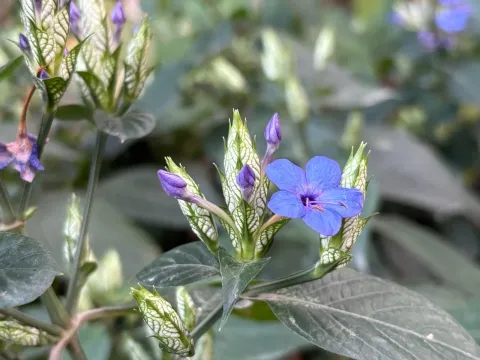
Eranthemum
Eranthemum
Eranthemum is a genus of evergreen herbaceous plants and subshrubs belonging to the Acanthaceae family. Originating from the tropical regions of Southeast Asia and India, these plants thrive in the humid forest understory environments.
What the section contains

Eranthemum
The botanical profile of Eranthemum is defined by its striking foliage, which often features unique variegation, and terminal spikes of flowers ranging from white to deep blue or purple. The leaves are typically ovate and possess distinct venation patterns.
To cultivate Eranthemum successfully, growers must provide a consistent tropical climate. The plant requires temperatures between 20 and 25 degrees Celsius and cannot tolerate frost or significant temperature drops.
Soil requirements dictate the use of a well-draining, nutrient-rich substrate. High humidity is essential for the plant to maintain its ornamental value, making it highly suitable for greenhouses or controlled indoor environments.
The primary use of this crop is in ornamental horticulture. It is frequently employed in interior landscaping, decorative pot plant production, and tropical garden design where shaded conditions are provided.
The most common pests affecting Eranthemum are spider mites, which flourish in low-humidity environments, and mealybugs that congregate on stems.
Fungal diseases related to root rot are a significant risk if the soil remains waterlogged or if drainage is insufficient during the dormant period.
Disease management involves strict adherence to irrigation schedules and ensuring that the potting medium remains moist but never saturated with water.
Pest control strategies rely on regular misting of leaves to increase ambient humidity and the application of appropriate systemic insecticides when infestations occur.
Effective prophylaxis includes maintaining optimal sanitation in the growing area to prevent the accumulation of pests and fungal spores on foliage.