
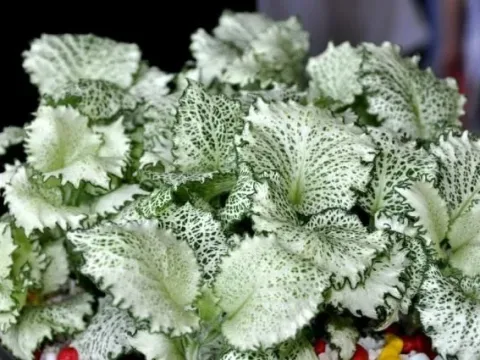
Fittonia
Fittonia
Fittonia (Fittonia) is a perennial herbaceous plant belonging to the Acanthaceae family. It is native to the tropical rainforests of South America, primarily Peru, where it thrives in humid and shaded forest floor habitats.
What the section contains


Fittonia
The plant is widely recognized for its striking foliage, which features a prominent network of colorful veins that stand out against dark green, olive, or variegated leaf blades. Botanically, Fittonia is characterized by its trailing growth habit and delicate, spreading stems.
To cultivate Fittonia successfully, a stable temperature range of 22–26 degrees Celsius is required. The plant is highly sensitive to cold drafts, which can cause severe stress, stem wilting, and premature leaf drop.
Humidity management is the most critical factor in Fittonia agriculture. The culture requires high atmospheric moisture levels, often making it an ideal candidate for enclosed environments such as terrariums or glass displays.
The soil substrate must be lightweight, porous, and consistently moist but well-draining. A mix of peat-based potting soil combined with perlite or coarse sand provides the ideal environment for the shallow root system of this species.
Common pests affecting Fittonia in cultivation include spider mites and mealybugs, which thrive in indoor environments with low humidity levels and poor ventilation.
Root rot caused by fungal pathogens such as Phytophthora or Pythium is a frequent issue, usually stemming from overwatering or inadequate soil aeration in the root zone.
Foliage yellowing is often a physiological response to incorrect watering habits, specifically prolonged saturation of the soil or exposure to excessively bright, direct sunlight.
Managing these threats involves maintaining consistent environmental parameters and performing regular leaf inspections to identify potential infestations at an early stage.
If chemical intervention is necessary, the use of mild horticultural soaps or systemic pesticides is recommended, always ensuring that the product is safe for delicate tropical houseplant foliage.