
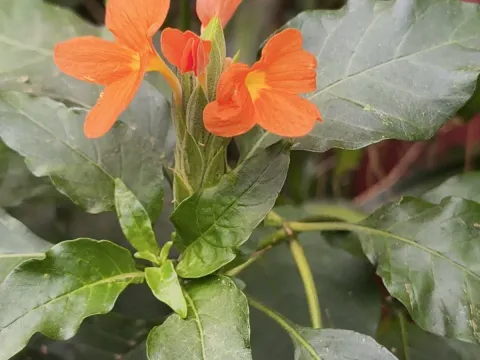
Crossandra
Crossandra
Crossandra is an ornamental genus of flowering plants belonging to the Acanthaceae family. Native to the tropical regions of India, Sri Lanka, and Africa, this plant has gained popularity worldwide due to its vibrant, fire-colored inflorescences and lush, glossy foliage.
What the section contains


Crossandra
In a controlled growing environment, Crossandra requires warm temperatures, ideally ranging from 20°C to 25°C. The species is highly sensitive to cold drafts, which can lead to leaf drop and stunted growth, making it unsuitable for areas with significant temperature fluctuations.
The soil requirements focus on moisture retention combined with excellent drainage. A mix of peat, pine bark, and perlite provides an ideal medium that prevents root hypoxia and maintains the slightly acidic pH levels necessary for nutrient uptake.
Light intensity is the primary driver of successful blooming. While the plant prefers bright, indirect light, it can be grown under artificial lighting in commercial nurseries to ensure year-round production of high-quality, dense flowering specimens.
Regular fertilization is essential during the active growing season. Utilizing balanced liquid fertilizers every two weeks ensures the plant receives the macro and micronutrients required to support its rapid growth and the high metabolic cost of continuous flowering.
The most significant pest risks for Crossandra include spider mites and aphids. These insects thrive in low-humidity environments, necessitating regular monitoring and maintaining optimal relative humidity levels through misting or humidifiers.
Systemic insecticides are the preferred choice for managing pest outbreaks in commercial greenhouse operations. It is crucial to rotate chemical classes to prevent the development of pesticide resistance in pest populations.
Root rot, primarily caused by Phytophthora or Pythium species, remains the most devastating disease. Ensuring that the pots have sufficient drainage holes and using sterile growing media are critical preventative measures against these pathogens.
Fungal leaf spot diseases may appear if there is poor air circulation and excessive moisture on the foliage. To minimize these risks, watering should be directed at the soil surface rather than overhead, and spacing between plants must be adequate.
Integrated Pest Management (IPM) practices, including the use of beneficial predatory mites, can effectively control pest populations while reducing the overall reliance on broad-spectrum chemical sprays in a sustainable farming model.