
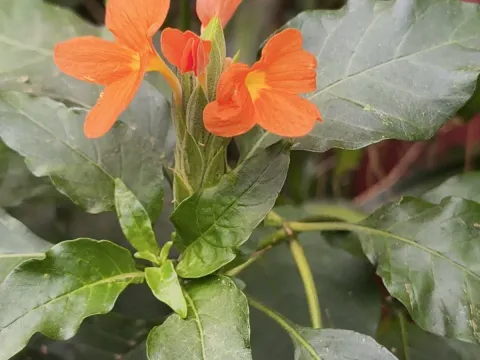
Crossandra
Crossandra Salisb.
Crossandra (Crossandra Salisb.) is a genus of tropical evergreen subshrubs belonging to the Acanthaceae family. Native to the tropical regions of India, Sri Lanka, and Madagascar, these plants thrive in environments with consistent warmth and high humidity levels.
What the section contains

Crossandra
The plant is widely recognized for its shiny, dark green foliage and spikes of vibrant, fan-shaped flowers. In horticultural practice, Crossandra infundibuliformis is the most popular species, valued for its long-lasting, bright orange or yellow blooms that provide significant ornamental appeal.
Regarding climatic requirements, Crossandra demands a warm environment, ideally kept between 20°C and 25°C. It is particularly sensitive to cold drafts and sudden temperature fluctuations, which can trigger leaf drop and lead to significant physiological stress for the plant.
The ideal soil for Crossandra is a well-draining, nutrient-rich medium with a slightly acidic to neutral pH. A mix containing peat moss, perlite, and high-quality potting soil provides the necessary aeration and moisture retention that the root system requires to flourish.
Cultural care involves frequent, light watering with temperate water. The soil should remain consistently moist but never waterlogged. Furthermore, maintaining high atmospheric humidity is essential, as the plant originates from rainforest environments and suffers in dry indoor conditions.
Spider mites are the most common pest threatening Crossandra, especially in dry, indoor environments. These pests thrive in low humidity and can quickly damage the foliage, leading to yellowing and premature leaf senescence if left untreated.
Whiteflies also pose a significant threat to the crop, as they feed on the underside of the leaves and can transmit viral diseases. Regular monitoring and the application of appropriate systemic insecticides are vital for managing these populations effectively.
Root rot is the primary disease concern, typically triggered by overwatering or poor soil drainage. When the roots remain in saturated soil, they become susceptible to fungal pathogens, often leading to rapid wilting and the eventual death of the plant.
Effective management strategies include ensuring optimal airflow around the plants and isolating any infested specimens to prevent the spread of pests. Regular cleaning of the leaves can also help deter pests and improve the overall vigor of the plant.
Applying fungicides is recommended only when specific fungal symptoms appear, as prophylactic use can sometimes disrupt the natural balance of the growing medium. Maintaining a strict watering schedule is the best preventive measure against the majority of fungal and bacterial threats.