
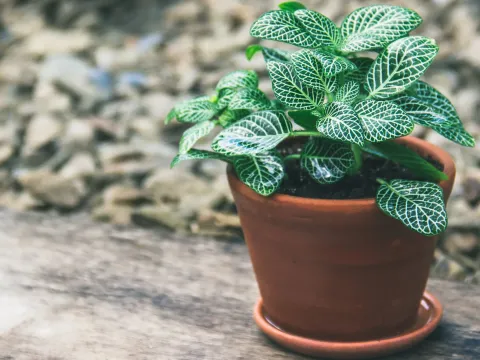
Fittonia
Fittonia Coem.
Fittonia (lat. Fittonia Coem.) is a perennial creeping herb belonging to the Acanthaceae family. Originating from the tropical rainforests of South America, specifically Peru, this plant is highly valued for its striking, vein-patterned foliage and compact growth habit.
What the section contains

Fittonia
The plant requires a strictly controlled tropical environment to thrive. It performs best in temperatures ranging from +22°C to +26°C. It is intolerant of cold drafts and sudden thermal fluctuations, which typically result in rapid leaf abscission and stem collapse.
Soil requirements for Fittonia focus on moisture retention combined with excellent drainage. A substrate consisting of high-quality peat, leaf mold, and coarse sand provides the necessary structure to support healthy root development while preventing waterlogging.
Light management is a critical aspect of Fittonia agrotechnics. The plants should be kept in bright, indirect light to maintain the vibrancy of the leaf patterns. Excessive solar radiation causes leaf scorch, while inadequate light leads to etiolation and loss of variegation.
Economically, Fittonia is widely cultivated for the indoor ornamental plant market. It is an essential component in the creation of terrariums and vivariums, where high humidity levels can be maintained, allowing the plant to reach its full ornamental potential.
Common pests affecting Fittonia include spider mites and mealybugs, which are particularly problematic in low-humidity conditions. Regular inspection of the underside of leaves is recommended to detect these infestations early and apply appropriate horticultural oils or insecticides.
Fungal diseases, primarily root rot and stem rot, are frequent issues caused by poor irrigation practices. Ensuring that the substrate is allowed to dry slightly at the surface between waterings is a necessary measure to inhibit the growth of water-borne pathogens.