
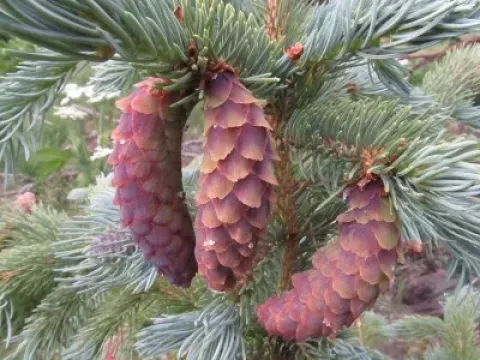
Meyer Spruce
Picea meyeri
Meyer Spruce (Picea meyeri) is a member of the Pinaceae family, known for its elegant conical shape and structural beauty. Originating from the mountainous regions of Northern and Central China, this evergreen tree has adapted to cold, temperate environments, making it a distinct choice for ornamental gardening.
What the section contains
Meyer Spruce
Botanically, the tree features dense branches with stiff, glaucous-green needles. During the reproductive phase, the spruce produces cylindrical cones that mature from a vibrant green to a deep brown. Its growth rate is generally moderate, allowing it to maintain a refined appearance over many decades.
In terms of soil requirements, Meyer Spruce thrives in well-drained, fertile, and slightly acidic soils. It is critical to avoid waterlogged sites, as the root system is sensitive to poor oxygenation. Sandy loams or loamy soils provide the ideal balance for optimal root development and nutrient uptake.
The climate requirements include a preference for cool summers and cold winters. While it is hardy, young trees require protection from harsh winds and intense spring sun, which can cause dehydration and needle scorch. Planting in partial shade during the early stages of life ensures better establishment.
This species is widely used in landscape architecture as a focal point or for creating windbreaks. Its resilience to city conditions and aesthetic longevity make it a valuable asset for municipal parks and private estate gardens, where it contributes to biodiversity and environmental health.
The primary fungal threat to Picea meyeri is needle cast (Rhizosphaera), which manifests as discolored needles that drop prematurely. Maintaining good air circulation within the canopy and removing infected fallen needles are essential steps for disease management in the home garden.
Spider mites are common pests that affect the spruce, especially during hot and dry periods. They pierce the needles to extract sap, causing the tree to lose its green luster and eventually appear faded or yellow. Monitoring for these small pests is crucial during mid-summer.
Root rot, particularly Phytophthora, represents a major risk if irrigation practices are not properly managed. Ensuring that the soil structure provides adequate drainage is the most effective preventative measure against soil-borne pathogens that target the roots of the tree.
Bark beetles may attack the tree, primarily when it is stressed by drought, poor soil nutrition, or physical damage. Keeping the tree vigorous through appropriate watering and fertilization programs is the best way to prevent infestation and maintain the structural integrity of the wood.
For chemical control, use professional-grade insecticides or fungicides specifically labeled for conifers. Always apply treatments during calm weather to ensure accuracy and minimize environmental impact, prioritizing the health and longevity of the landscape specimen.